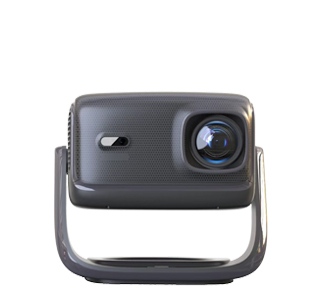
With the refined development of the global consumer electronics OEM
industry, the projector industry’s OEM model has upgraded from simple component
assembly and production to a full-chain service system integrating customized
adaptation, standardized installation, precision commissioning and quality
acceptance. Complete machine Projector OEM has become a core cooperation model
for brand owners to operate asset-light, rapidly expand markets and reduce costs
and efficiency, which is widely applied in the production and delivery of
full-category projectors including home smart projectors, commercial office
projectors and cultural tourism engineering projectors. Compared with scattered
component assembly OEM, the core competitiveness of complete machine OEM lies
not in hardware stacking, but in standardized, refined and standardized overall
machine installation technology. As the terminal core link of complete machine
production, installation directly determines the structural stability, imaging
accuracy, operating noise, service life and landing adaptability of projectors.
It is the core standard to distinguish low-end OEM from high-end brand-level
OEM, and also the key barrier for Complete machine Projector OEM services to
empower brand customers and build core industrial competitiveness.
The projector industry has long been plagued by uneven OEM quality. Most
small and medium-sized OEM factories lack standardized installation systems and
only rely on simple manual assembly, ignoring core processes such as precision
installation, structural commissioning and optical adaptation. This leads to
batch defects of mass-produced complete machines, including loose body, picture
offset, focusing failure, abnormal operating noise and heat dissipation failure,
which seriously damages brand terminal reputation and market competitiveness. In
contrast, professional Complete machine Projector OEM services are fully
supported by a full-process standardized installation system, covering seven
core links: pre-installation survey, component adaptive pre-installation,
complete machine structural assembly, precise optical commissioning, line
sorting and fixing, aging test installation and acceptance delivery. Each link
is equipped with strict process parameters and quality control standards to
avoid mass failures from the source and ensure the uniformity and stability of
the quality of each OEM complete machine. For projector brand owners, choosing
an OEM factory with a mature standardized installation system is equivalent to
directly obtaining brand-level high-quality finished products, greatly reducing
quality control costs and after-sales pressure.
Pre-production adaptive installation survey and preprocessing are the basic
prerequisites for Complete machine Projector OEM to guarantee complete machine
quality, as well as the primary link different from ordinary assembly OEM.
Unlike the simple assembly model, professional full machine OEM conducts
comprehensive survey and preprocessing according to customer product
positioning, parameter schemes and application scenarios before mass
installation. Differentiated installation process standards are customized for
different models such as home portable projectors, commercial high-brightness
projectors and engineering long-throw projectors, and accurate installation
procedures and accessory adaptation schemes are formulated combined with
equipment shell structure, optical path layout, heat dissipation architecture
and interface positions. At the same time, original adapted parts are strictly
selected, and core accessories such as lamp beads, lenses, main boards, heat
dissipation fans and bracket screws are pre-tested to eliminate quality risks
caused by mismatched specifications and defective accessories. In addition,
production line equipment is calibrated before installation, and professional
equipment such as horizontal tooling and focusing instruments are debugged to
ensure unified mass installation accuracy and lay a solid foundation for
subsequent complete machine assembly.
Standardized installation of core structures is the core process for
Complete machine Projector OEM complete machine forming, which directly
determines the structural stability and service life of equipment. The complete
machine structure assembly follows the core principles of "inside-out layered
assembly and precise fixing". Firstly, internal core components including
driving main board, heat dissipation module and light source module are
accurately positioned and fixed, internal wiring is sorted to avoid extrusion,
winding and dislocation of lines and ensure stable circuit operation. Secondly,
the hardware bracket and body frame are assembled with standardized torsion
technology; the screw fixing torque is controlled at 15-20N·m with
anti-loosening nuts adopted to prevent screw loosening and body shaking during
long-term equipment operation. In the shell assembly process, the middle frame
and front and rear shells are precisely aligned and evenly pressed and fixed,
with the assembly gap error controlled within 2mm. Meanwhile, the tightness of
the rotating bracket is adjusted to ensure smooth and unobstructed angle
adjustment. For commercial and engineering-grade models, additional structural
reinforcement installation processes are added to strengthen the assembly
standards of load-bearing parts, adapting to long-term continuous operation and
high-frequency mobile usage scenarios.
Precision installation and commissioning of optical systems are the core
key for Complete machine Projector OEM to improve the imaging quality of
complete machines, as well as the core technical advantage of high-end OEM. The
imaging effect of projectors completely depends on the precise assembly of the
optical path system. Ordinary OEM assembly is prone to problems such as lens
offset, focusing stuttering, inclined optical path and image distortion,
resulting in blurry pictures, trapezoidal distortion and uneven color of
finished products. In the professional full machine OEM installation process,
optical system installation is set as an independent core process.
Instrument-assisted precise positioning technology is adopted to firstly
complete the accurate installation and positioning of COB lenses, reflectors and
imaging chips, strictly controlling the levelness and verticality of the optical
path to ensure lossless and offset-free light transmission. Subsequently, the
lens module is precisely installed and focused to calibrate the lens travel and
ensure smooth and accurate focusing in both short-distance and long-distance
projection scenarios. After installation, professional optical equipment is used
to detect and correct picture uniformity, clarity and color restoration,
eliminating slight optical path deviation and unifying the imaging quality of
all mass-produced OEM machines to meet commercial-grade image standards.
Standardized installation of lines and safety systems is an important
guarantee for Complete machine Projector OEM to ensure stable equipment
operation and eliminate potential safety hazards. Standardized circuit
installation determines the electrical safety and operating stability of
projectors. Low-end OEM products often suffer from short circuits, system
crashes and abnormal heat generation due to messy wiring, non-standard wiring
and inadequate insulation treatment. Professional OEM installation strictly
abides by national electronic equipment safety standards. Power wiring follows
the principle of "zero wire on the left, live wire on the right and ground wire
on the top", and HDMI and signal interfaces are accurately inserted and locked
to ensure stable and delay-free signal transmission. All internal lines are
sorted and fixed in categories with insulating buckles and heat-insulating
straps, avoiding high-temperature areas of heat dissipation modules to prevent
line aging and damage. Meanwhile, overload protection and voltage stabilization
modules are adaptively installed and debugged; the capacity of the overload
protection switch matches 150% of the rated equipment power to fully avoid
potential safety hazards such as short circuits, overload and electric leakage,
ensuring that the complete machine meets domestic and foreign electrical safety
standards and adapts to multiple qualification requirements for cross-border
export and domestic commercial use.
Post-production adaptive installation, aging test and fine commissioning
are the quality final links for Complete machine Projector OEM mass delivery.
After the completion of complete machine assembly, products will not be
delivered directly. Instead, scenario-based adaptive installation commissioning
and long-term aging tests will be carried out. The levelness, projection angle
and trapezoidal correction parameters of the equipment are debugged for desktop
placement, wall mounting, ceiling mounting and floor mounting scenarios to adapt
to diverse installation and usage needs. Functional adaptive commissioning is
also completed to ensure the normal operation of intelligent dimming, dynamic
light and shadow, wireless screen projection, Bluetooth linkage and other
functions. Furthermore, a 72-hour continuous power-on aging test is conducted to
simulate high-frequency daily working conditions and detect hidden faults such
as abnormal noise, brightness attenuation, overheating and system stuttering for
targeted rework and calibration. Finally, dust-proof and light-shielding
treatments are implemented to paste lens dust-proof films and body
light-shielding patches, preventing dust from entering the equipment and
affecting optical and circuit operation, and improving the durability of the
complete machine.
The standardized installation process system endows Complete machine
Projector OEM with strong market competitiveness, completely breaking the
homogeneous and low-quality development dilemma of the traditional OEM industry.
For small and medium-sized brands, start-up brands and cross-border traders,
there is no need to invest a large amount of funds in production lines and
R&D. Relying on the mature complete machine OEM installation system, they
can quickly obtain standardized finished products with stable structure,
high-quality imaging, safe operation and multi-scenario adaptability to rapidly
enter the projector market. Meanwhile, professional OEM factories can integrate
personalized customized services into the installation process according to
brand customer demands, including body logo engraving, appearance color
matching, accessory package customization and pre-adjustment of firmware
parameters, balancing standardized quality and personalized requirements. From
the perspective of industrial development, the upgrading and refinement of
installation technology is promoting the transformation of the projector OEM
industry from "assembly OEM" to "quality intelligent manufacturing", leading the
high-quality and standardized development trend of the industry.
At present, competition in the smart projector market is becoming
increasingly fierce. End consumers have continuously higher requirements for
equipment stability, imaging quality, service life and safety performance. Brand
owners’ core demand for OEM has upgraded from "capacity delivery" to
"high-quality, stable and premium delivery". As the core support of complete
machine quality, installation technology has become a key indicator to judge the
service strength of Complete machine Projector OEM. In the future, with the
continuous improvement of projector intelligence and precision, OEM installation
technology will be iteratively upgraded, introducing automatic precision
assembly, intelligent optical commissioning, digital quality control detection
and other new technologies to further improve assembly accuracy and mass
production stability. Relying on the ultimate standardized installation system,
high-quality full-machine OEM service providers will continue to empower brand
customers, help major projector brands reduce production costs, improve product
quality and expand market channels, and promote the in-depth upgrading of the
entire projector OEM industry towards high-end, standardized and intelligent
development.
Read recommendations:
HW40 Home Cinema - HW Series Projector
Is the Automatic Focus Function of Projectors Useful
Projector Eye - Protection Function
















 Reviewed: