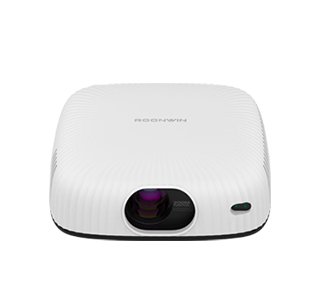
With the rapid development of segmented markets for intelligent projection
equipment, standardized mass-produced models can no longer meet the refined
application requirements of diverse scenarios. Commercial conferences,
educational training, home audio-visual entertainment and outdoor engineering
scenarios impose distinct standards for picture performance, operational
stability, interface adaptation, power consumption and heat dissipation, driving
manufacturers to shift from generalized production to refined parameter
customization. Benefiting from the mature digital light processing imaging
architecture, projectors feature highly adjustable parameters. Targeted
calibration and optimization of core hardware parameters, imaging algorithm
parameters and electrical operating parameters enable scenario adaptation and
accurate performance upgrading. From a professional parameter tuning
perspective, refined customization is not a simple addition or reduction of
functions, but a comprehensive reconstruction of imaging, color, operation and
adaptation parameter systems based on scenario demands, so that equipment
performance can precisely fit the strict standards of segmented markets.
Refined calibration of core imaging parameters forms the foundation of
customized upgrading. The imaging quality of projectors is determined by both
physical chip parameters and optical driving parameters. To balance mass
production costs, general models adopt compromised parameter tuning, failing to
release the ultimate potential of hardware. In customized optimization, the flip
frequency and grayscale response parameters of digital micromirror devices are
firstly calibrated to improve the dynamic resolution of pictures. Mass-produced
standard models have a narrow grayscale adjustment range, which easily causes
detail loss in dynamic images with alternating light and dark areas. Customized
improvement of grayscale sampling accuracy effectively enhances picture
layering. Meanwhile, projection ratio, focusing accuracy and keystone correction
parameters are adjusted for different scenarios. Optical offset parameters are
corrected for short-throw close-range projection and long-throw engineering
projection, eliminating inherent defects such as edge blurring, image distortion
and focusing lag of general models, and improving the clarity and regularity of
projected images for exclusive scenarios.
Personalized calibration of color parameters serves as the core advantage
of differentiated customization. Different application scenarios have vastly
different requirements for color accuracy, gamut coverage and color temperature.
Home audio-visual scenarios prioritize wide-gamut and high-saturation image
performance with gentle color temperature for immersive viewing experience.
Commercial office and educational scenarios focus on authentic color restoration
with accurate pure white background and controllable color deviation, ensuring
distortion-free display of documents, PPTs and teaching courseware. During
customization, technicians recalibrate primary color gain, white balance
threshold, color temperature gears and color correction parameters, replacing
the unified color tuning scheme of general models. By precisely controlling
Delta E color deviation values and optimizing gamut coverage rate, three
independent color modes for entertainment, office and engineering scenarios are
established, thoroughly solving common defects of standard equipment such as
color cast, oversaturation and washed-out images and realizing accurate matching
between color parameters and scenario demands.
Dynamic optimization and customization of brightness and contrast
parameters greatly enhance scenario adaptability. Brightness and contrast are
decisive parameters for visual clarity. Fixed brightness output of ordinary
models cannot adapt to scenarios with variable ambient light. Excessively high
brightness leads to dazzling visual experience in dark environments, increased
power consumption and accelerated light source loss, while insufficient
brightness fails to resist ambient light interference and results in blurry
images under strong light. Customized parameter upgrading supports multi-level
adjustable brightness and intelligent dynamic adaptation. By calibrating light
source driving current and optical valve switching frequency, multiple fixed
brightness gears are set. Equipped with adaptive dynamic contrast algorithms,
the equipment automatically adjusts black level and image brightness hierarchy
according to ambient light intensity, lowering brightness and deepening black
field details in dark environments and increasing light transmittance and image
clarity under strong light, balancing visual experience and light source service
life.
Stabilized customization of electrical and heat dissipation parameters
guarantees long-term operational performance. Continuous full-load operation is
a typical working condition for commercial and engineering projectors. General
default settings of power consumption threshold, temperature control strategy
and fan speed fail to support long-duration operation, easily causing
high-temperature frequency reduction, picture jitter and overheating failure.
Customized optimization recalibrates the overall power consumption curve and
adjusts chip operating frequency thresholds to distinguish power consumption
parameters under different loads including standby, static images,
high-definition dynamic playback and high-frequency operation, avoiding invalid
power loss. Meanwhile, temperature control logic and fan speed curves are finely
tuned for graded speed regulation based on internal temperature gradient,
reducing operating noise while ensuring heat dissipation efficiency, and
balancing heat dissipation performance, noise control and overall stability to
meet the demands of all-day operation in meeting rooms, long-hour teaching in
classrooms and round-the-clock outdoor engineering applications.
Adaptive customization of signal transmission and interface parameters
expands equipment compatibility boundaries. With the popularization of
high-definition video, high-refresh audio-visual and wireless screen casting
technologies, traditional models with fixed parameters suffer from incomplete
resolution adaptation, insufficient refresh rate and high casting latency.
Customized upgrading tunes video decoding parameters, signal receiving bandwidth
and maximum picture refresh rate to support 4K high-definition decoding and
high-frame-rate dynamic output and adapt to mainstream video encoding formats.
In addition, electrical parameters of HDMI, USB and wireless transmission
interfaces are optimized to reduce signal transmission loss and latency, and
screen synchronization parameters are adjusted to resolve casting stuttering,
audio-video desynchronization and resolution adaptation anomalies, greatly
improving external expansion capability and multi-device linkage stability.
Intelligent customization of firmware algorithm parameters enhances overall
interactive experience. Intelligent functions of modern projectors such as
auto-focus, automatic keystone correction, obstacle avoidance and screen
recognition rely heavily on underlying algorithm parameters. General models
adopt conservative algorithm parameters with low recognition speed and
correction accuracy. Customized optimization of image sampling frequency,
recognition threshold and correction compensation parameters improves the
response speed and accuracy of intelligent functions and reduces image
correction errors. System operating parameters are further optimized to
streamline redundant background processes, enhance system fluency and reduce
stuttering risks, maintaining stable output during frequent movement, repeated
adjustment and long-term standby.
In summary, the customized upgrading of projectors is essentially the
scenario-based reconstruction of a full-dimensional parameter system. Refined
tuning of optical imaging parameters, color image parameters, power consumption
and temperature control parameters, signal adaptation parameters and intelligent
algorithm parameters thoroughly breaks the performance limitations of
standardized mass-produced equipment and solves common drawbacks including poor
scenario adaptability, unbalanced performance and insufficient operational
stability. As market segmentation continues to deepen, parameter-based
customization based on practical scenario demands maximizes hardware potential
for each device, becoming a core development trend toward high-end and refined
projector manufacturing.
Read recommendations:
HW45 Home Cinema - HW Series Projector
CE projector for home wall projection
Portable Projector low price











 Reviewed: