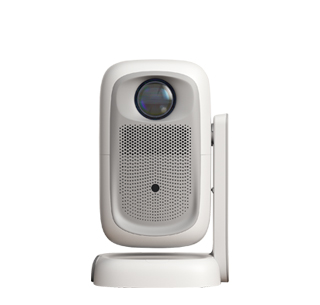
Brightness virtual standard is a common problem in the projector industry, especially in low-cost portable projector products. Many merchants falsely mark high brightness parameters to attract consumers, resulting in serious inconsistency between the actual use effect and the propaganda. Mastering professional identification methods can effectively avoid stepping on pits and accurately select projectors with true and reliable brightness parameters.
First of all, identify the lumen marking unit to distinguish standard lumens from false lumens. Regular projectors will clearly mark CVIA lumens or ANSI lumens, which are industry-standard stable brightness values. Many inferior products only mark "physical lumens", "lamp bead lumens" and "peak lumens". These values are the instantaneous maximum brightness of the light source, not the stable working brightness. The peak brightness is usually 2 to 3 times the actual stable brightness, which is the most common means of brightness virtual standard.
Secondly, verify the brightness through actual scene test and parameter matching. Users can judge intuitively through daytime projection effect: genuine 1000 CVIA lumens projectors can present clear pictures in soft daytime light, while virtual standard products marked with 2000 lumens will have whitened and fuzzy pictures in the same environment. In addition, there is a fixed matching relationship between projector power and brightness. The brightness of low-power projectors below 50W is impossible to reach 2000 CVIA lumens, and excessive parameter mismatch must be virtual standard.
Finally, refer to professional evaluation data and brand qualification. Regular big-brand projectors have official professional test reports and third-party certification data, with transparent and true parameters. Most miscellaneous brand products with virtual brightness have no authoritative certification, and the user evaluation area is full of feedback such as "dark picture" and "false brightness". In addition, the brightness attenuation speed can also be identified: virtual standard projectors will have obvious brightness decline after a short period of use, while genuine standard projectors have stable long-term brightness.
Read recommendations:
HW40 Home Cinema - HW Series Projector
Repair of Projector Screens
16G Projector for Office












 Reviewed: