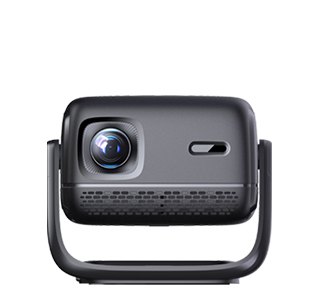
With the rapid iteration of the smart audio-visual and commercial display
industry, projectors, as core devices for home giant-screen movie viewing,
commercial conference demonstration, education and training teaching, and
outdoor scene exhibition, continue to see expanding market demand. However, the
entire industry has fallen into a development dilemma of "growing sales,
declining reputation, fierce internal competition and rampant chaos". As a
professional projector manufacturer focusing on lumens optical technology,
Lumens Projector manufacturer has been deeply engaged in the projector
manufacturing track for many years, and has an in-depth insight into the
full-chain pain points of the industry from upstream optical accessories and
midstream equipment assembly to downstream channel sales and end-user
experience. The core contradiction of the current projector industry is no
longer the supply and demand problem of product availability, but the experience
imbalance caused by low-price industry involution, rampant parameter virtual
labeling, uneven optical quality, disconnected scene adaptation and missing
after-sales systems. A large number of small OEM factories and low-end workshops
seize the low-end market by ignoring industry standards, compressing core
optical costs, falsely labeling lumen brightness and simplifying process quality
control. This not only disrupts the market pricing system and overdrafts user
trust in the industry, but also puts regular projector manufacturers in the
operational dilemma of "bad money driving out good money". This paper deeply
analyzes the core problems existing in the projector industry from four
dimensions: common industry chaos, end-user pain points, distributor channel
pain points and development pain points of regular manufacturers. Meanwhile, it
combines the standardized manufacturing advantages of Lumens Projector
manufacturer to analyze the core path of industry breakthrough, providing a
reference for the standardized, high-quality and refined development of the
projector industry.
Throughout the entire smart projector industry, the proliferation of fake
lumen brightness parameters and normalized parameter fraud are the most
deep-rooted and widely influential core chaos, as well as the primary cause of
the highest user complaint rate and collapsed reputation, restricting the benign
development of high-quality Lumens Projector manufacturer. As the core optical
parameter of projectors, lumen brightness directly determines the imaging
clarity of equipment in strong daytime light and bright indoor environments,
serving as a key reference for users to purchase products and the main
breakthrough point for low-end manufacturers to fake parameters. Currently, the
industry suffers from severe confusion of parameter standards. Most low-end
generic manufacturers confuse the three core standards of ANSI lumens, source
lumens and peak lumens, deliberately blur parameter definitions, and disguise
low-magnification source lumens as standard ANSI lumens for sale. A large number
of low-cost projectors falsely mark 1000, 2000 or even 3000 lumens with actual
ANSI lumens less than 300, and market with exaggerated slogans of "direct
daytime projection and high-definition high brightness", resulting in a huge
experience gap for users after purchase, with washed-out, blurry and detail-less
pictures in daytime scenarios that fail to meet daily use needs. Industry
sampling data shows that nearly half of low-end projector products have false
brightness parameters with a maximum false magnification of 3-5 times, seriously
violating industry testing standards. This bottomless parameter fraud not only
misleads consumers and causes difficulty in rights protection, but also puts
regular Lumens Projector manufacturer that adhere to real standard parameters
and genuine optical materials in a passive position. Formal manufacturers invest
heavily in researching and developing optical lenses, upgrading light source
modules and calibrating brightness parameters in strict accordance with
international ANSI lumen standards, yet they are squeezed by low-priced falsely
labeled products due to slightly higher prices and no false marketing, forming a
deformed industry ecology where genuine quality is overlooked and fake
parameters sell well.
In addition to parameter virtual labeling, uneven optical quality,
disconnected imaging experience and shrinking core craftsmanship are common
product pain points in the current projector industry, and key reasons for low
industry repurchase rate and declining user trust. Projectors are sophisticated
equipment integrating optics, electronics, heat dissipation and intelligent
algorithms, whose imaging quality, color restoration, focusing stability and
picture uniformity completely depend on mature optical technology and precision
assembly. However, most OEM factories in the industry completely abandon core
craftsmanship polishing and only pursue production cost compression, cutting
corners on optical lenses, light source modules, imaging chips and structural
calibration. Most low-end projectors adopt cheap resin lenses with low light
transmittance, severe dispersion and easy yellowing and aging, resulting in
greatly reduced picture clarity and serious color deviation after half a year of
use. Inferior LED lamp beads are used in light source modules with uneven
luminescence and rapid brightness attenuation, causing partial picture dimming,
light spots and strobing after short-term use. Meanwhile, low-end manufacturers
omit picture calibration procedures, leaving products with distorted colors,
uneven brightness, blurred edges and severe ghosting in dynamic pictures without
factory color calibration and clarity optimization. For end users, such products
seem cost-effective but provide poor actual experience, with distorted colors
and poor eye protection for home viewing, fuzzy text and missing details for
business conferences, and shaky pictures affecting teaching for education and
training scenarios. As a professional manufacturer deeply engaged in optical
technology, Lumens Projector manufacturer insists on adopting
high-light-transmittance glass lenses, high-quality light source modules and
refined factory calibration. Nevertheless, the overall industry craftsmanship
shrinkage and user misleading by low-cost products prevent the market from
accurately recognizing the value of high-quality optical products, leading to
continuous decline of the industry’s overall product experience level and
squeezed high-end quality market.
Defective heat dissipation design, out-of-control power consumption and
high equipment failure rate are long-standing technical pain points of the
projector industry and common flaws of low-end products, further exacerbating
the industry’s reputation crisis. As high-precision optoelectronic equipment,
projectors continuously generate heat from light source luminescence and chip
operation. The rationality of the heat dissipation system design directly
determines the operational stability, noise control and service life of
equipment. To reduce costs in shell, mold and heat dissipation, most low-cost
projector products in the industry adopt minimal heat dissipation structures,
inferior cooling fans and thin heat sinks with extremely low heat dissipation
efficiency and serious design flaws. The equipment accumulates heat rapidly
after short-term operation, causing high body temperature, chip frequency
reduction and light source brightness attenuation, leading to picture
stuttering, sudden brightness drop and color distortion. Long-term
high-temperature operation accelerates the aging of internal components,
resulting in abnormal fan noise, overheating, automatic black screen and
frequent crashes. Meanwhile, low-end products lack intelligent temperature
control algorithms with fixed fan speed, causing excessive noise during low-load
video viewing and insufficient heat dissipation during high-load operation,
failing to balance silent experience and heat dissipation efficiency. In terms
of end-use scenarios, long-term high-temperature operation of household
equipment poses potential safety hazards, while low-end projectors frequently
break down in business conferences, education and training, exhibition displays
and other scenarios requiring 7×24-hour high-frequency continuous operation,
seriously affecting efficiency and causing numerous after-sales problems. In
contrast, formal Lumens Projector manufacturer optimizes the heat dissipation
structure in the early product research and development stage, adopting
multi-channel three-dimensional heat dissipation, graphene uniform heat
dissipation materials and intelligent temperature control and speed regulation
systems to accurately balance heat dissipation, noise and power consumption.
However, the overall heat dissipation craftsmanship shortcomings of the industry
have formed users’ inherent stereotype that "projectors are easy to break,
overheat and noisy", greatly increasing the market education cost and
after-sales reputation maintenance cost of formal manufacturers.
From the perspective of distributors and channel markets, severe low-price
industry involution, rampant product homogenization and high stocking risks are
core pain points plaguing all projector wholesalers and channel merchants, as
well as key bottlenecks restricting the benign development of industry channels.
In recent years, the entry threshold of the smart projector industry has been
greatly reduced, and a large number of three-no OEM factories with no research
and development, no factory and no quality control have flooded the market,
launching fierce price wars relying on extremely low production costs and
pressing the price of entry-level projectors to the industry bottom line. Such
products have no core technology or process advantages, and only seize the
sinking market relying on low-price gimmicks, resulting in serious product
homogenization in the industry. Most low-end projectors on the market have
similar appearance and functions without differentiated selling points, making
it impossible for channel merchants to establish product competitive advantages.
Meanwhile, low-price involution forces the industry into a vicious cycle of
"price reduction and configuration reduction". Manufacturers continue to cut
hardware costs, shrink optical configurations and simplify quality control
processes to maintain profits, leading to continuous decline in product quality
and rising repair rates. Channel merchants currently face prominent operational
dilemmas: low-price product stocking seems profitable but brings numerous
terminal after-sales complaints, high return and exchange rates and rapid
reputation loss, easily damaging store credibility; high-end formal products
have reliable quality and stable after-sales service but are relatively
expensive, difficult to sell in the low-price involution market with low
stocking turnover efficiency. In addition, most OEM factories in the industry
have no unified supply standards, stable quality control systems or perfect
after-sales guarantees, resulting in uneven product quality in different
batches. Channel merchants are faced with problems such as inconsistent product
experience and frequent faults after stocking, with greatly increased inventory
backlog, after-sales loss and customer complaint costs, which greatly undermines
the business confidence of channel merchants and causes the continuous shrinkage
of offline channels and frequent iteration of online stores in the projector
industry in recent years.
Confused industry standards, missing quality control systems and imperfect
after-sales guarantees are the underlying structural pain points of the
projector industry and the fundamental reasons why industry chaos cannot be
eradicated and reputation continues to deteriorate. Currently, the smart
projector industry has low entry thresholds without unified mandatory production
standards, parameter standards and quality control specifications. Different
manufacturers adopt diverse testing standards, parameter definitions and process
requirements, resulting in mixed market product quality that is difficult for
consumers to distinguish. Ordinary consumers lack professional testing
capabilities and are easily misled by marketing slogans, facing great
difficulties in consumer rights protection. In terms of production quality
control, three-no OEM factories completely skip factory testing, aging tests and
parameter calibration processes and directly ship products without quality
screening, allowing defective products to flow into the market and greatly
raising the overall industry failure rate. In terms of after-sales systems, most
low-end manufacturers and OEM merchants lack professional after-sales teams,
national joint warranty systems and formal maintenance processes. Users have no
access to rights protection, maintenance difficulties and missing accessories
after product faults, and most low-cost projectors have to be scrapped directly
after failures with unprotected consumer rights and interests. Formal
manufacturers such as Lumens Projector manufacturer strictly follow
international optical standards, establish full-process quality control systems
and build national joint warranty after-sales systems, requiring a great deal of
investment in research and development, testing and operation and maintenance.
However, the industry’s bottomless low-price competition and missing standards
prevent the compliance and quality costs of formal enterprises from being
converted into market advantages, leaving them in a long-term unfair competitive
environment of "compliance at a loss and inferiority profiting", which seriously
restricts the standardized upgrading and development of the industry.
Against the background of concentrated outbreaks of industry chaos and pain
points, Lumens Projector manufacturer, deeply rooted in the projector optical
manufacturing field, takes solving core industry pain points and reshaping
industry quality standards as its core development philosophy, targeted solving
five major industry problems including parameter virtual labeling, process
shrinkage, experience disconnection, missing after-sales service and channel
involution, and becoming a core force promoting the benign development of the
industry. For the most prominent industry pain point of brightness virtual
labeling, all brand products are strictly measured and marked in accordance with
the international universal ANSI lumen standard, with fully real-labeled and
tested brightness, imaging clarity and color parameters, eliminating parameter
fraud chaos from the source and rebuilding users’ trust in projector brightness
parameters. To solve the pain points of shrinking optical craftsmanship and
uneven picture quality, the brand adheres to independent research and
development of optical architecture, adopts high-precision light-transmitting
glass lenses, high-quality long-acting light source modules and professional
color calibration algorithms. Every device undergoes five core processes before
leaving the factory: brightness calibration, color optimization, focusing test,
aging test and heat dissipation detection, eliminating picture color deviation,
blurriness, aging and strobing to ensure unified, stable and high-quality
imaging of all products. Aiming at heat dissipation faults and out-of-control
noise, it optimizes the multi-channel three-dimensional heat dissipation
structure, equipped with graphene heat dissipation materials and intelligent
temperature control systems to dynamically balance heat dissipation efficiency
and operating noise, realizing long-term uninterrupted operation without
frequency reduction, stuttering or high-temperature faults and greatly extending
equipment service life.
Meanwhile, targeting the industry pain points of poor intelligent
experience and insufficient scene adaptation, Lumens Projector manufacturer
abandons bloated advertising systems, adopts pure lightweight intelligent
systems, streamlines redundant software and eliminates pop-up advertisements.
Equipped with sufficient memory and storage configuration and high-performance
processing chips, it ensures long-term smooth operation of equipment. At the
same time, refined calibration is carried out for five segmented scenarios:
household, commercial, e-sports, outdoor and education, adding exclusive
functions such as AI ambient light adaptation, professional eye protection mode,
e-sports low-delay mode, commercial high-definition projection adaptation and
outdoor anti-light enhancement, accurately matching the core usage needs of
different scenarios and completely solving the industry pain point of
supply-demand mismatch between products and scenarios. For channel involution
and high stocking risks, the brand adheres to quality-oriented and
differentiated channel layout, refuses low-price inferior involution, builds
differentiated product advantages with real parameters, solid craftsmanship,
high quality and stable after-sales service, provides distributors with
standardized supply, stable batch quality control, perfect after-sales
empowerment and all-round product material support, reduces channel stocking
risks and improves terminal transaction rate and repurchase rate, enabling
channel merchants to get rid of vicious low-price competition and achieve stable
profits. To solve the underlying pain points of confused industry standards and
missing after-sales service, the brand establishes a full-chain standardized
system covering accessory procurement, production and assembly, factory testing,
terminal sales and after-sales maintenance, strictly follows authoritative
industry production standards, builds a national joint warranty after-sales
team, and provides efficient equipment maintenance, replacement and technical
guidance services to fully protect the rights and interests of consumers and
distributors.
Overall, all chaos and pain points in the current smart projector industry
are essentially industry development drawbacks caused by extensive expansion,
disorderly low-price competition, missing standard systems and lazy technical
craftsmanship. Parameter virtual labeling overdrafts industry trust, process
shrinkage reduces product experience, heat dissipation defects increase failure
probability, intelligent lag deviates from user needs, channel involution
disrupts market order, and missing standards connive at chaos. The superposition
of multiple pain points has led the projector industry from a home furnishing
bestseller track to growth bottlenecks and reputation crises. The core way for
the industry to break through is to completely abandon the extensive development
model of low price and inferior quality, return to product essence and user
needs, and reshape industry value with standardized parameters, refined
craftsmanship, scenario-based experience and improved after-sales service.
Adhering to the original intention of formal manufacturing, Lumens Projector
manufacturer takes solving industry pain points as its responsibility, breaks
industry chaos with real parameters, solid craftsmanship, high-quality
experience and stable after-sales service, provides reliable, practical and
durable high-quality projector products for end users, and offers low-risk,
high-return and sustainable high-quality supply solutions for channel
distributors. It continuously promotes the comprehensive transformation of the
smart projector industry from price involution to quality upgrading, from chaos
to standardization, and from extensive growth to refined development, leading
the industry out of development dilemmas and reshaping the new value system of
the projector industry.
Read recommendations:
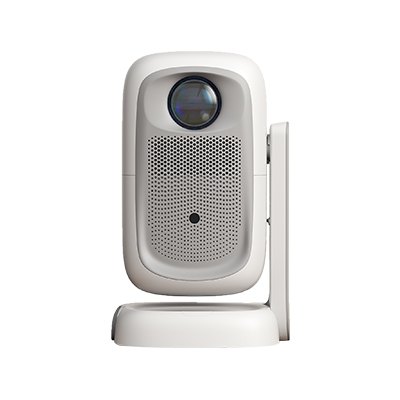
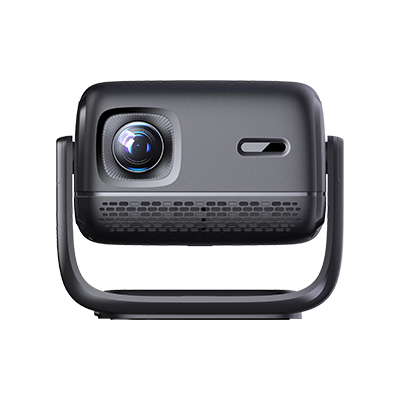
HN30A Portable - HN Series Projector
Wireless Bluetooth ABS Projector
Projector with voice control
















 Reviewed: