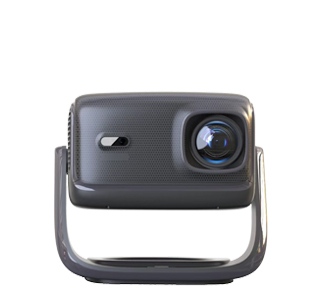
Intelligent projection devices are rapidly gaining popularity across
multiple sectors including home audio-visual, commercial conferences,
educational training and portable outdoor scenarios. Market demands have
gradually shifted from simply pursuing brightness parameters to comprehensive
capabilities such as computing power, image optimization, intelligent
interaction and power consumption balance. For projection OEMs and ODMs engaged
in product development, the core difficulty usually lies not in optical
structure design, but in the selection of the main control platform. A mature
and stable main control solution directly determines the image processing
capacity, system smoothness, external expansion capability and product iteration
cycle of the complete device. A suitable platform can shorten the whole machine
R&D cycle, reduce the cost of hardware and software joint debugging, and
help brands quickly launch products adapted to segmented markets. This is the
fundamental reason for the intensifying competition of projection chip platforms
in recent years.
For the development of projection devices, image processing capability is
the most important evaluation indicator of the main control platform.
Traditional entry-level chips can only complete basic video decoding. When
processing high-bitrate 4K video sources and dynamic HDR images, they tend to
suffer from color banding, motion blur and loss of dark-area details, which
seriously damage the experience of video watching and presentation. High-quality
main control platforms integrate dedicated image enhancement engines to perform
real-time image optimization, including dynamic contrast adjustment, noise
reduction, color calibration and motion compensation technology. When playing
high-speed motion images such as sports events, high-definition videos and
dynamic presentation slides, the engine can effectively eliminate motion blur
and improve image fluency. For low-brightness environments, the engine can
intelligently brighten dark areas while retaining details in highlighted parts
to avoid overexposure. This set of image processing capabilities enables
projection devices at different price ranges to achieve more balanced image
performance, narrow the viewing gap caused by differences in optical hardware,
and help brands create differentiated product selling points.
The integration of AI computing power is a major upgrade direction of
new-generation main control platforms. Modern projection devices are no longer
limited to video playback. Voice interaction, automatic focus, automatic
keystone correction, obstacle avoidance and screen recognition have become
standard features of mid-to-high-end models. All these functions require
sufficient AI computing power supported by the chip. Relying on the built-in
neural processing unit, the platform can quickly process image data collected by
cameras, complete real-time image distortion correction without manual
adjustment of the device position by users. When obstacles are detected in the
projection area, it can automatically adjust the projected image range to
preserve complete imaging. Local deployment of voice algorithms also enables
offline local voice control, reducing dependence on the network and improving
response speed. Powerful AI computing power transforms projection equipment from
simple audio and video players into intelligent terminals with perception
capabilities, greatly improving user convenience, especially suitable for
scenarios such as commercial meeting rooms and classrooms where equipment needs
frequent movement.
Multi-standard media decoding and external expansion capability are
mandatory requirements for both commercial and home scenarios. Home users may
connect NAS storage devices, high-definition players and game consoles. Meeting
room scenarios require compatibility with various signal sources including
computers, tablets and USB flash drives. Different devices output varied
resolutions, refresh rates and encoding formats. Mature main control platforms
support mainstream audio and video coding formats, smoothly decode high-bitrate
high-definition videos, and are equipped with rich interface protocols to
support high-definition signal input and output and compatibility with multiple
external terminals. The platform also supports multi-screen wireless casting
technology to lower the threshold of cross-device connection and realize fast
screen mirroring from mobile phones and computers to the projection screen.
Stable screen casting protocols reduce image latency to meet the requirements of
office presentation, online meetings and gaming. For projection manufacturers,
native support of abundant protocols reduces the workload of secondary software
development, cuts compatibility bugs and improves user reputation after product
launch.
Power consumption control and thermal adaptation design directly affect the
stability and service life of projection devices. The light source inside the
projector generates heat, and the main control chip, as the core computing unit,
also produces heat during operation. Excessively high chip power consumption
will sharply increase the heat dissipation pressure of the whole unit, easily
trigger high-temperature frequency reduction, resulting in picture stuttering,
system restart, and even accelerate the aging of internal components. Advanced
main control platforms adopt refined process design to optimize power
consumption curves while ensuring sufficient computing power, and dynamically
adjust operating frequency according to load. Under different working modes such
as standby, video playback and AI calculation, the platform automatically
matches corresponding power consumption levels to balance performance and heat
generation. Excellent power efficiency also makes portable projection products
feasible. Portable models rely on built-in batteries for power supply. The
higher the chip energy efficiency ratio, the longer the battery life under the
same battery capacity, which can better meet scenarios such as outdoor use and
temporary mobile demonstrations.
Software ecosystem and project technical support are essential factors for
manufacturers during platform selection. The launch of a projection product
relies not only on hardware chip performance, but also long-term technical
support including underlying drivers, operating system adaptation, application
migration and bug fixes. A complete platform supporting development kits
provides underlying SDK, reference designs and debugging tools, helping hardware
teams finish motherboard design quickly and software teams carry out system
customization. Manufacturers can customize UI interfaces and built-in
applications based on reference designs according to product positioning to
create exclusive user experience. Meanwhile, the platform team continuously
provides system update support. New functions can be added and security
vulnerabilities can be fixed via OTA updates in later stages to extend the
product life cycle. Comprehensive technical support is especially important for
small and medium-sized brands. It can make up for the shortage of internal
R&D teams and reduce the risk of project failure.
Facing the future market, projection devices will continue to develop
toward higher resolution, stronger AI perception, lower latency and compact
portable form factors. As the brain of the complete unit, the main control chip
platform will continuously iterate image algorithms, AI computing power and
multimedia processing capabilities. When selecting platforms, projection brands
should not only focus on short-term costs, but comprehensively evaluate multiple
dimensions including computing power, image capability, energy efficiency and
technical support, and select platforms available for long-term iteration. With
mature main control solutions, manufacturers can rapidly respond to market
changes and continuously launch projection products for home, education,
commercial and other scenarios, promoting the steady development of the whole
projection industry toward intelligence and high performance.
Read recommendations:
HN30A Portable - HN Series Projector
Diffuse Reflection Eye Protection Projector
Can Projectors Connect to TV Boxes












 Reviewed: