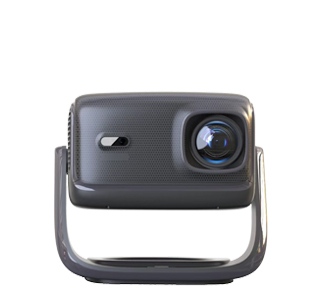
Auto focus and manual focus each have unique advantages and applicable scenarios, and there is no absolute good or bad. The choice depends on the user’s usage habits, projector placement mode, and viewing precision requirements. Modern projectors mostly integrate dual focus modes, but understanding the differences between the two can help users give full play to the device’s optimal performance and improve daily use convenience and image quality stability.
Auto focus is the mainstream practical function for modern household smart projectors, relying on built-in ToF sensors or CMOS cameras to automatically detect the projection distance and screen state. It can complete precise focus calibration in milliseconds when booting up, moving the device, or changing the projection angle. For users who frequently move the projector, use side projection, or pursue lazy and convenient operation, auto focus is far more practical. It avoids repeated manual debugging and always keeps the screen clear, greatly optimizing the daily use experience.
Manual focus has irreplaceable advantages in high-precision image quality debugging and stable fixed-position use. The auto focus system of some entry-level projectors has minor errors, resulting in slightly soft local screen details. Users can fine-tune the focus ring manually to make the whole screen sharp and consistent in detail. For fixed-installed home theater projectors and office fixed-point projection equipment, one-time manual precise focus can maintain long-term stable clear images, avoiding slight jitter and deviation caused by frequent auto focus startup.
In terms of service life and stability, manual focus structures are simpler, with fewer electronic components and almost no failure rate, while auto focus relies on sensors and algorithm programs, which may have failure risks such as insensitive induction and focus deviation after long-term use. In comprehensive household scenarios, auto focus is more suitable for most ordinary users due to its high convenience; professional users pursuing ultimate image quality can combine auto focus quick calibration with manual fine-tuning to achieve the best focus effect.
Read recommendations:
HW45 Home Cinema - HW Series Projector
4K 3d Projector
Smart Home theater Projector











 Reviewed: