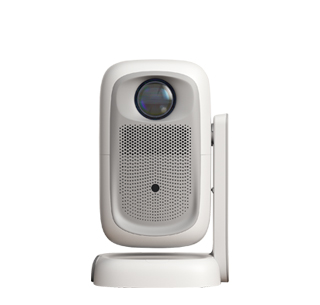
Lens quality is a critical factor that directly impacts the overall viewing experience of a projector, as it determines image sharpness, brightness uniformity, color accuracy, and installation flexibility. Projector users, regardless of their usage scenario, have clear requirements for lens quality, with different user groups emphasizing different aspects based on their specific needs—from casual viewers seeking basic clarity to professional users demanding precise image reproduction.
For home theater and professional users, sharpness and resolution are top priorities, which depend on the lens’s ability to correct aberrations and maintain clarity across the entire screen. High-quality lenses typically use a combination of aspherical and low-dispersion (ED) glass to eliminate spherical and chromatic aberrations, ensuring that even 4K resolution images remain crisp and detailed without blurriness or color fringing. For example, lenses with 3 or more aspherical lenses can effectively reduce distortion, while ED glass minimizes purple or green edges around objects, which is crucial for watching movies, editing videos, or displaying high-resolution documents. These users also require a high modulation transfer function (MTF) value—ideally above 0.4@150lp/mm—to ensure that fine details, such as text or small objects, are clearly visible both in the center and at the edges of the screen.
Brightness uniformity is another key requirement for most projector users, especially those who use projectors in well-lit environments or large spaces. A high-quality lens should ensure that the brightness across the entire screen is consistent, with a uniformity rate of at least 90%, so that the edges of the image are not darker than the center. This is achieved through optimized lens design, such as placing the aperture at the optical center and using high-transmittance optical glass (like Schott N-BK7, which has a transmittance of over 92% per sheet) with multi-layer anti-reflective coatings. These coatings reduce light reflection between lens surfaces (to less than 0.3% per surface), minimizing light loss and ensuring that the maximum brightness from the light source is transmitted to the screen. Business users and educators, who often display presentations or teaching materials, particularly value brightness uniformity to avoid straining the audience’s eyes.
Installation flexibility, influenced by the lens’s throw ratio and keystone correction capabilities, is also a important consideration for many users. The throw ratio (the ratio of projection distance to screen width) determines how much space is needed to achieve a desired screen size—short-throw lenses (1.2-1.5:1) are ideal for small rooms, while ultra-short-throw lenses (less than 1:1) allow projectors to be placed close to the screen, saving space. Additionally, lenses with ±15° vertical and horizontal keystone correction enable users to adjust the image shape without moving the projector, which is convenient for non-ideal installation positions. Users in small apartments or offices, where space is limited, often prioritize lenses with flexible throw ratios and keystone correction to ensure a proper image without extensive installation work.
Read recommendations:
HW40 Home Cinema - HW Series Projector
compact rechargeable projector
3d Projector for laptop connection










 Reviewed: