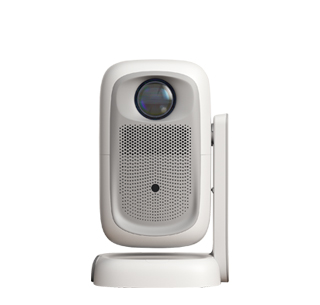
Projectors with stereoscopic 3D effect generate a true three-dimensional image by simulating the way human eyes perceive depth—using two slightly different images (one for the left eye, one for the right eye) that the brain merges into a single 3D view. Unlike “pseudo-3D” projectors (which use color filters to create a flat 3D illusion), these models deliver authentic stereoscopic effects that make content have height, width, and depth—suitable for 3D movies, architectural design previews, medical imaging, and gaming.
The key to stereoscopic 3D effect is accurate image separation and synchronization: 1) Image Separation: The projector uses either active or passive technology to ensure each eye sees only its designated image. Active shutter technology (as mentioned earlier) uses high-refresh-rate projection (120Hz+) and sync glasses to alternate images; passive polarized technology uses a special filter in the projector lens to split light into horizontal and vertical polarizations, which are then filtered by passive glasses. 2) Synchronization: For active 3D, the projector and glasses sync via a wireless signal (infrared or RF) to ensure the left lens opens when the left-eye image is projected, and vice versa—this synchronization has a latency of less than 1ms to avoid 3D “ghosting” (double images).
To optimize the stereoscopic effect, these projectors include: 1) 3D Depth Adjustment: Users can adjust the 3D depth (from 0 to 100%) to control how “far” or “close” 3D objects appear—for example, increasing depth for an action movie to make explosions feel more impactful, or reducing depth for a children’s movie to avoid overwhelming young viewers. 2) 2D-to-3D Conversion: They can convert standard 2D content (e.g., old movies, TV shows) into stereoscopic 3D—while the effect is not as good as native 3D, it adds depth to existing content by analyzing image layers (e.g., foreground, background) and creating left/right eye variations. 3) Lens Shift and Zoom: These features help align the 3D image perfectly on the screen—lens shift adjusts the image’s position without moving the projector, ensuring no 3D misalignment; zoom allows resizing the image to fit the screen, maintaining consistent 3D proportions.
In professional fields, stereoscopic 3D projectors are used for architectural visualization (letting clients “walk through” a 3D building model) and medical training (displaying 3D anatomical scans with precise depth). For home users, they bring the cinema’s 3D experience into living rooms—paired with a high-gain projection screen, they deliver bright, clear 3D images that rival commercial theaters. When choosing a stereoscopic 3D projector, prioritize native 3D support (over conversion-only models) and check compatibility with 3D content formats (e.g., Blu-ray 3D, 3D streaming services like Netflix 3D).
Read recommendations:
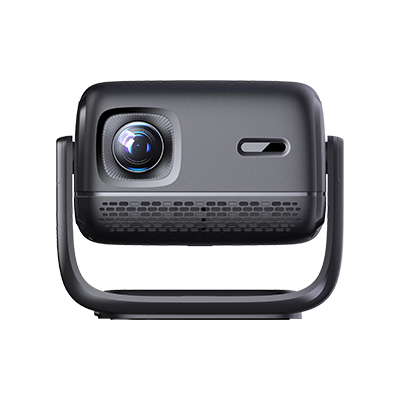
HN30B Portable - HN Series Projector
Bedroom Projector Installation
Home Projector Installation Position Guide










 Reviewed: