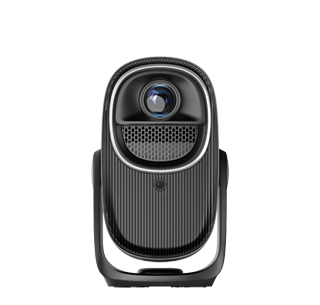
Projector light sources are the core components that determine brightness, color performance, service life and use scenarios, and mainstream market types include traditional UHP mercury lamps, LED light sources, laser light sources and hybrid light sources. Each light source has unique performance characteristics and applicable crowds, and scientific selection needs to comprehensively balance use scenarios, budget, brightness requirements and later maintenance costs. Traditional UHP mercury lamps are the earliest mainstream projector light source, with the advantages of high instantaneous brightness and mature technology, and the unit price of equipment is low. However, their inherent defects are obvious: short service life, high heat generation, large power consumption, and poor color stability. They are only suitable for temporary low-budget use scenarios such as small temporary meetings and short-term home entertainment.
LED light sources are the most popular civilian light sources at present, with outstanding comprehensive advantages. They have a long service life of 30,000 to 50,000 hours, low heat generation, low power consumption, and stable color rendering, and basically no later maintenance. The brightness of mainstream LED projectors ranges from 200 to 1,500 lumens, which can meet the daily viewing needs of home theaters, small offices and student dormitories in dark or low-light environments. In addition, LED projectors are small in size, light in weight and low in noise, which is very suitable for mobile use and indoor daily use. The only limitation is that the brightness is insufficient to cope with strong light environments and large-space projection, so they are not applicable for large commercial venues with high brightness requirements.
Laser light sources are the high-end mainstream choice for commercial and high-demand household scenarios, divided into single laser and dual laser light sources. Laser light sources have ultra-high brightness, with mainstream models reaching 3,000 to 6,000 lumens, which can clearly present images in strong light environments such as large conference rooms, exhibition halls and outdoor scenes. Their service life is as long as 50,000 to 100,000 hours, with ultra-stable color accuracy and high contrast, restoring rich and delicate image layers. Although laser projectors have high upfront purchase costs, they have zero maintenance cost in the later stage and strong environmental adaptability. Hybrid light sources combine the advantages of LED and laser, balancing cost and performance, suitable for medium-budget users who pursue both brightness and cost performance. Users need to select the matching light source type according to their actual use environment and long-term use needs to avoid performance surplus or insufficient configuration.
Read recommendations:
HN30B Portable - HN Series Projector
Projectors for Home Theater Setup
customization sunset Projector













 Reviewed: