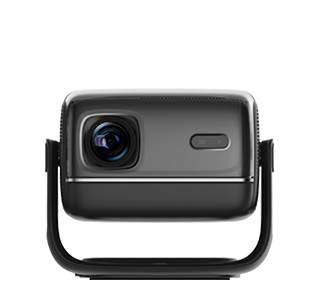
The imaging chip is the core hardware of the projector, and its size is a decisive factor affecting the ultimate image quality, far more critical than many auxiliary parameters such as brightness and resolution. Projector chips mainly include DMD chips for DLP projectors and LCD panels for LCD projectors, and the larger the chip size under the same technology and resolution, the stronger the light control ability, imaging stability, and detail restoration ability. Common civilian projector chip sizes include 0.23-inch, 0.33-inch, 0.47-inch, and 0.65-inch, with larger sizes concentrated in mid-to-high-end flagship models, while small-sized chips are mostly used in entry-level and portable projectors.
Large-size chips bring fundamental improvements in three core image quality dimensions: detail performance, noise control, and light utilization efficiency. First, a larger chip can accommodate more precise pixel structures, effectively eliminating the "pixel grid" and grainy sense common in small-chip projectors, making the picture delicate and smooth. Second, large chips have stronger light control capabilities, which can precisely control the opening and closing of each pixel unit, presenting purer black levels and higher picture layering, effectively suppressing picture noise and stray light interference. In addition, large-size chips have higher light utilization efficiency, which can convert more light source energy into effective imaging brightness, avoiding the problem of insufficient actual brightness and faded colors of small-chip projectors even with nominal high brightness.
Small-size chips are limited by hardware volume, and their inherent defects are difficult to compensate for through software algorithms. Even with 4K resolution decoding technology, small-chip projectors can only achieve pixel shifting imaging, lacking real physical pixel density, resulting in insufficient detail restoration of distant scenes and complex textures. In contrast, projectors with 0.47-inch and above large chips can present real high-definition imaging, with more accurate color calibration and stronger dynamic picture stability. For users pursuing long-term high-quality viewing, large-size chips are the primary choice for purchasing projectors, as they determine the upper limit of picture quality, while other parameters only affect the lower limit of use experience.
Read recommendations:
HW40 Home Cinema - HW Series Projector
PCBA 3D Printing Technology Application
Large - Screen Projector Screens














 Reviewed: