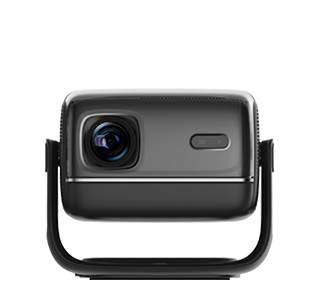
MEMC (Motion Estimation and Motion Compensation) is a key image enhancement technology in projectors, designed to solve the problem of motion blur and judder that often plagues fast-moving content such as action movies, sports, and video games. Traditional projectors display images at a fixed frame rate (typically 24 or 30 frames per second), which can result in visible gaps between consecutive frames when objects move quickly, leading to blurry trails or a choppy viewing experience. MEMC addresses this issue by using advanced algorithms to analyze the motion of objects in consecutive frames, estimate their trajectory, and generate intermediate frames to fill in the gaps, effectively increasing the effective frame rate and creating smoother, more fluid motion.
The core role of MEMC is to enhance the clarity and smoothness of fast-moving content, making it easier for the human eye to track objects and reducing eye strain during extended viewing. For example, when watching a basketball game, a projector without MEMC will display the ball as a blurry streak as it flies through the air, while a projector with MEMC will generate intermediate frames that show the ball’s position at each stage of its movement, resulting in a sharp, clear trajectory. Similarly, in action movies with fast-paced fight scenes or car chases, MEMC eliminates the blur that can make it difficult to follow the action, allowing viewers to fully immerse themselves in the content. This is particularly important for sports enthusiasts and gamers, who rely on clear, smooth motion to enjoy their favorite content.
Beyond improving motion smoothness, MEMC also enhances the overall viewing experience by reducing judder— a common issue when playing 24fps movies on projectors with higher native frame rates. Judder occurs because 24fps does not divide evenly into 60fps (the native frame rate of many projectors), leading to uneven frame display. MEMC solves this by generating additional frames to match the projector’s native frame rate, creating a seamless viewing experience. While some users may prefer the “cinematic” look of non-MEMC 24fps content, most viewers find that MEMC significantly improves the watchability of fast-moving content. It is worth noting that the effectiveness of MEMC varies by projector—high-end models use more advanced algorithms that generate more natural-looking intermediate frames, while budget models may produce artificial or “soap opera” effects. Overall, MEMC has become an essential feature for modern projectors, especially those designed for home entertainment and gaming, as it directly addresses one of the most common complaints about projector performance.
Read recommendations:
HN30B Portable - HN Series Projector
3d Projector for business presentation
Built-in Mini Projector portable














 Reviewed: