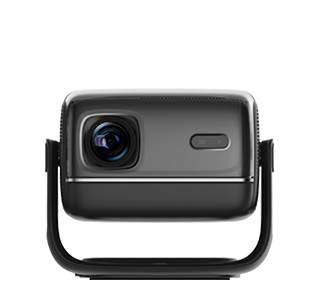
With the rapid popularization of lightweight scenarios such as portable
audio-visual entertainment, mobile office, outdoor camping and store light
display, compact projectors have become hot-selling products in the consumer
electronics distribution market due to their small size, easy portability,
flexible installation and wide scenario adaptation. For compact Projector
Distributor, product parameters are the core factors that determine the
competitiveness of goods distribution, terminal conversion rate and after-sales
failure rate. Different from ordinary large-screen home projectors, compact
projectors have a completely different parameter trade-off logic, which requires
a balance between compact body, stable image quality, battery life and
adaptability. Most distributors tend to fall into the misunderstanding of only
focusing on brightness while ignoring comprehensive parameters when stocking
goods, resulting in numerous end-user complaints, low repurchase rate and
declining word-of-mouth. From the practical perspectives of terminal sales,
goods distribution and after-sales operation and maintenance, this paper
comprehensively analyzes the core key parameters, parameter adaptation standards
and quality discrimination points of compact projectors, providing professional
references for distributors to accurately select products, supply goods in
compliance with regulations and expand customers efficiently.
Brightness parameter is the core stocking indicator of compact projectors
and the most intuitively perceived parameter by end users. Distributors must
strictly distinguish between ANSI lumens and source lumens in the industry to
avoid publicity deviations. At present, the brightness range of compact
projectors on the market varies greatly. Entry-level models generally have
50–300 source lumens, which are only suitable for dark light scenarios such as
fully dark bedrooms and night outdoors, and are used for low-end volume sales.
Mid-range mainstream models reach 300–800 ANSI lumens, which can cope with
indoor weak light environments and meet the daily needs of home video watching
and small-scale office screen projection, serving as the mainstream bestsellers
in the distribution market. High-end commercial compact models have a brightness
of over 1000 ANSI lumens, with basic anti-light capability, adapting to mild
bright light scenarios such as daytime store display and temporary meetings. The
core stocking standard for distributors is to mainly promote models with no less
than 300 ANSI lumens in terminal retail, completely avoiding low-brightness
models with washed-out images and insufficient clarity. Meanwhile, distributors
should avoid blindly pursuing ultra-high brightness, which would increase costs,
compress terminal profit margins, and accurately match the scenario needs and
price expectations of mainstream users.
Resolution and contrast ratio parameters directly determine the fineness of
image quality and serve as the core basis for grading product levels and
differentiating distribution price gaps. In terms of resolution, mainstream
compact projectors are divided into physical resolution and decoding resolution,
which are also key pitfalls for distributors. Most entry-level models have a
physical resolution of 480P and support 1080P high-definition decoding, with
blurry image details and only suitable for basic screen projection. Mid-range
high-quality models adopt 720P physical high-definition resolution, perfectly
supporting 1080P video playback with delicate and clear image edges. High-end
premium models are equipped with native 1080P physical resolution, forming the
core competitive products in the mid-to-high-end distribution track. The
contrast ratio affects the layering sense of images. The reasonable contrast
ratio range of compact projectors is 2000:1–10000:1. Models with high contrast
ratio present pure black pictures, high color saturation and rich details in
light and dark areas, while those with low contrast ratio have gray and dull
images. Distributors should adhere to the principle of prioritizing physical
resolution over decoding resolution when selecting products, eliminate products
with falsely marked parameters, and guarantee terminal word-of-mouth.
Projection ratio and image adjustment parameters determine the product’s
scenario adaptability and directly affect the terminal transaction rate.
Projection ratio is a distinctive core parameter of compact portable projectors.
The projection ratio of mainstream models is concentrated at 1.1:1–1.5:1, and
some ultra-short-throw compact models can reach 0.8:1, which can project an
80–120-inch large screen in a narrow space, perfectly adapting to limited
scenarios such as rental houses, small offices and vehicle-mounted outdoors.
Meanwhile, keystone correction and automatic focus parameters are indispensable.
Basic models only support manual vertical correction with cumbersome operation,
while high-quality models are equipped with fully automatic four-way keystone
correction and intelligent focus, which can automatically correct square images
when placed obliquely or offset without manual adjustment, greatly improving
user convenience. For distributors, models with intelligent image adjustment
functions have slightly higher procurement costs but significantly upgraded user
experience and higher terminal premium space, making them high-quality choices
for differentiated goods distribution and suitable for deep cultivation in the
mid-to-high-end distribution market.
Hardware battery life and heat dissipation parameters are hidden core
indicators that control after-sales failure rates and improve repurchase rates,
as well as the key to long-term operation for distributors. Compact projectors
have small bodies with limited heat dissipation space, and the quality of the
heat dissipation module directly determines the service life of the equipment.
High-quality models adopt mute cooling fans and multi-air-channel heat
dissipation design, which can work stably for 4–6 hours without overheating
stutter or abnormal noise during long-term power-on operation. Inferior models
have simple heat dissipation structures, prone to overheating, screen stutter
and automatic shutdown during long-term operation, leading to extremely high
after-sales complaint rates. In terms of battery life, built-in battery compact
projectors are mostly equipped with 6000–10000mAh batteries, with a standard
battery life of 2–4 hours, meeting the needs of outdoor powerless scenarios.
Models powered by external power are more suitable for fixed indoor scenarios
with stable and attenuation-free battery life. In addition, the light source
life parameter is crucial. The standard life of LED light sources can reach
20000–30000 hours with no need for light source replacement for long-term use
and extremely low operation and maintenance costs, making them the preferred
light source type for distributors.
System configuration and interface parameters determine the practicality
and adaptation scope of products, catering to the needs of more terminal users.
At the system level, mainstream compact projectors are equipped with intelligent
Android systems, supporting wireless screen casting, Bluetooth connection, APP
download, voice control and other functions with simple operation, suitable for
users of all age groups. Old entry-level models adopt pure projection systems
that only support wired screen casting with single functions and weak market
competitiveness. Interface parameters include HDMI, USB, audio port, network
port and others. Rich interfaces can adapt to the linkage of multiple devices
such as computers, mobile phones, U disks, audio equipment and game consoles to
expand usage scenarios. Distributors should prioritize models with complete
interfaces, smooth systems and updatable firmware, balancing simple operation
for novice users and multi-functional needs for senior users, adapting to full
scenarios of home use, office work, outdoor activities and commercial use, and
expanding terminal sales audiences.
In conclusion, compact Projector Distributor should not solely pursue low
prices or high parameters for goods distribution, but build a product matrix
with gradient parameters according to terminal market positioning. Low-end
volume-selling models guarantee basic brightness and clarity to focus on cost
performance; mid-range bestsellers balance image quality, functions and
stability to adapt to mainstream public needs; high-end premium models
strengthen anti-light performance, intelligent adjustment and battery life to
focus on differentiated premium profits. Accurately controlling various core
parameters and eliminating falsely marked and defective products can not only
effectively reduce after-sales operation and maintenance pressure, but also
enhance the competitiveness of terminal products, stabilize the advantages of
distribution channels and achieve long-term stable profitability.
Read recommendations:
HI Gift Customization - HI Series Projector
Portable Screen for Outdoor Camping Dedicated Projectors
3d Projector portable power bank compatible















 Reviewed: