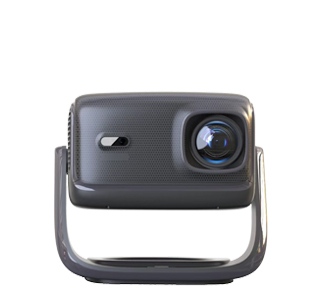
With the popularization of full-daylight application scenarios such as
commercial office, store display, supermarket promotion, outdoor meetings and
daytime teaching, the disadvantage of weak-light imaging of traditional
projectors has become prominent, failing to meet users’ core needs of watching
videos with windows open, high-definition screen projection in daytime and
stable imaging in strong light environments. Daylight-specific projectors with
strong anti-interference capabilities against ambient light have become
mainstream market demands. As a core hub connecting upstream projection chip
manufacturers, terminal equipment vendors and offline consumer markets, daylight
Projector Distributor directly determines the imaging effect and market
reputation of terminal daylight projection equipment through product selection,
solution layout and supply system. Among the core performance dimensions of
daylight projection, light source brightness, heat dissipation system and
anti-light coating are auxiliary configurations. The core key that determines
the upper limit of equipment daylight imaging, pure picture quality in strong
light and brightness conversion rate is the physical size of the projection
imaging chip. For daylight Projector Distributors, mastering the performance
differences, scenario adaptation logic and market positioning of different chip
sizes is the core barrier to accurately layout products, differentially seize
the daylight projection market and provide highly adaptive solutions for
customers.
There has long been a common market chaos in the projection industry: many
low-end projection products blindly stack light source brightness parameters to
attract consumers with high lumen nominal values, but the pictures appear
whitewashed with lost details and collapsed contrast in actual daylight
environments. The core root lies in the mismatch between chip size and
brightness configuration. As the mainstream technical solution for daylight
scenarios, DLP projection adopts DMD digital micromirror chip as its core
imaging carrier. The physical size of the chip directly determines the number of
micromirror arrays, the light receiving area of a single micromirror and the
light reflection efficiency, following the ironclad industry rule that a larger
sensor delivers superior performance. Limited by physical hardware
specifications, small-size chips cannot effectively carry strong light output
even with high-power light sources, resulting in extremely low light conversion
efficiency. Most of the light source energy is converted into heat instead of
effective screen brightness, eventually leading to the problem of "inflated
parameters and poor actual performance". Therefore, graded selection based on
chip size has become the core technical barrier for daylight Projector
Distributors to avoid low-end homogenization and build a high-quality daylight
projection distribution system.
At present, the projection chip market has formed a complete size gradient
system. Different chip sizes correspond to differentiated daylight imaging
capabilities and market positioning, serving as the core basis for daylight
Projector Distributors to refine product layout. 0.23-inch and 0.33-inch are
entry-level universal chip sizes for projectors, featuring a small number of
micromirrors and narrow light-receiving areas with a light utilization rate of
less than 60%. They are only suitable for full-dark low-light viewing scenarios,
completely unable to resist ambient light interference and inapplicable to
daylight projection. They are also the core hardware source of low-quality
inferior daylight projection products. Professional daylight Projector
Distributors will completely eliminate such chip models to prevent inferior
products from entering the commercial daylight market, damaging end-user
experience and their own brand reputation, and focus on the product layout of
mid-to-high-end chips adapted to daylight scenarios.
0.39-inch and 0.47-inch chips are mainstream sizes for mid-range daylight
projectors and the golden configurations for civil and light commercial daylight
scenarios, matching the core customer groups of most distributors. Among them,
the 0.39-inch chip adopts a new-generation micromirror architecture with reduced
micromirror gaps and greatly reduced invalid reflection areas, achieving a
significantly improved light reflectivity. Compared with small-size chips of the
same level, it delivers over 30% higher picture contrast in daylight
environments, adapting to soft indoor daylight scenarios and meeting the basic
needs of small and medium-sized conference rooms, daytime home viewing and small
store displays. The 0.47-inch flagship civil chip is equipped with more than
2.07 million physical micromirrors, boasting stronger pixel bearing capacity and
a greatly expanded single micromirror light-receiving area with a light
conversion rate of over 75%. It can stably support effective daylight brightness
of 3000-5000 ANSI lumens, retaining rich color layers and picture details even
in strong light environments such as natural light through windows and indoor
ceiling lights. It is currently the main configuration of civil daylight
projectors and small and medium-sized commercial daylight projectors, as well as
the core product matrix for daylight Projector Distributors to achieve stable
sales and profits.
For high-end commercial and engineering-level full-daylight strong light
scenarios, 0.65-inch and larger professional chips are essential configurations
and serve as the core competitive advantage of high-quality daylight Projector
Distributors. Compared with 0.47-inch chips, the 0.65-inch large-bottom DMD chip
has a nearly 90% increased micromirror light reflection area and greatly
enhanced luminous flux with a light utilization rate exceeding 85%. It can
support ultra-high effective brightness of over 8000 lumens and resist extreme
strong light environments such as outdoor strong sunlight, large supermarket top
light and open exhibition hall full-day illumination. Meanwhile, large-size
chips feature stronger dynamic light and shadow regulation capabilities, which
can accurately suppress ambient light halos in daylight environments, deepen the
black background of pictures and eliminate whitewashing and color distortion.
They are perfectly applicable to high-precision scenarios such as large-scale
engineering projection, outdoor cultural tourism projection and high-end
commercial exhibition full-day display. For distributors, deploying daylight
projection equipment with large-size chips can tap into high-value engineering
order markets, get rid of low-end price involution and improve overall profit
margins and industrial competitiveness.
Chip size not only determines the basic picture quality and brightness
upper limit of daylight projectors, but also directly affects the long-term
stability and after-sales cost of equipment, which is the key for daylight
Projector Distributors to control product quality and optimize service systems.
When small-size chips work with high-power light sources under long-term strong
light operation, they are prone to accelerated micromirror aging, brightness
attenuation, picture dark spots and other failures due to insufficient computing
power bearing and excessive heat dissipation pressure, resulting in extremely
high equipment failure rates and greatly increased after-sales operation and
maintenance pressure for distributors. In contrast, large-size chips have
sufficient hardware redundancy, stable operation under high-intensity light
load, slow micromirror loss rate, and can maintain stable imaging effects after
long-term daylight use, greatly extending equipment service life. Distributors
who mainly promote daylight projection products equipped with large-size chips
can effectively reduce after-sales disputes, accumulate high-quality customer
reputation and build a long-term stable channel cooperation system.
Relying on a sound chip size grading system, professional daylight
Projector Distributors can achieve full-scenario and refined layout of daylight
projection products, accurately matching customers’ scenario needs and budget
standards. For the home daytime viewing market, 0.47-inch chip models are
promoted to balance high-definition picture quality, daylight anti-glare
capability and cost performance, adapting to ordinary family window viewing
needs. For small and medium-sized office and education markets, a combination of
0.39-inch and 0.47-inch models is adopted to balance performance and cost,
suitable for daily daylight screen projection in classrooms and small conference
rooms. For high-end commercial and engineering cultural tourism markets,
exclusive layout of 0.65-inch and larger chip equipment is carried out to meet
high-end customized needs of all-weather strong light, ultra-large screens and
long-term uninterrupted operation. This refined product selection logic based on
chip size completely solves the industrial pain points of blind stocking and
poor product adaptability of traditional distributors, realizing on-demand
supply and accurate empowerment for the terminal market.
Currently, competition in the daylight projection industry is becoming
increasingly fierce, evolving from simple brightness parameter competition into
comprehensive competition covering chip size, hardware specifications and
daylight imaging stability. End-users are becoming more professional, no longer
blindly pursuing high lumen parameters, but focusing on core hard indicators
such as chip size and effective daylight imaging effect, forcing distributors to
upgrade product layout. As a core channel force in the industry, high-quality
daylight Projector Distributors are no longer simple equipment distributors, but
scenario solution service providers based on chip size technical logic. In the
future, with the continuous expansion of daylight projection application
scenarios, large-size and high light efficiency chips will gradually become the
mainstream industrial configuration. Distributors will continue to optimize
product matrices and upgrade service capabilities relying on chip size grading
advantages, provide higher-quality and more adaptable daylight projection
products for the whole industry, and promote the standardized and high-quality
development of the daylight projection industry.
Read recommendations:
HN30A Portable - HN Series Projector
Smart OS Projectors
Educational Interactive 1080P Projector














 Reviewed: