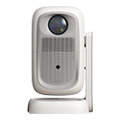
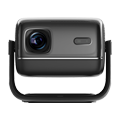
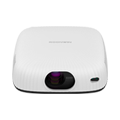
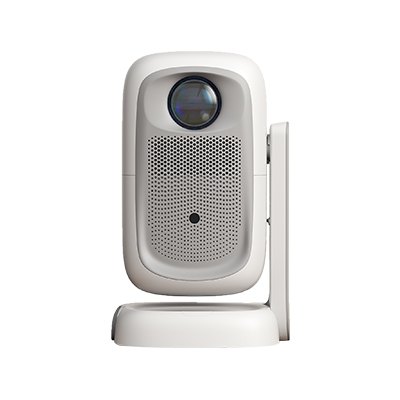
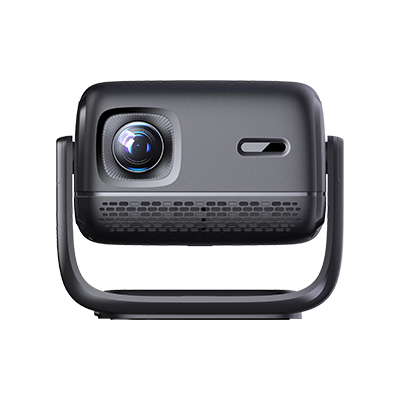
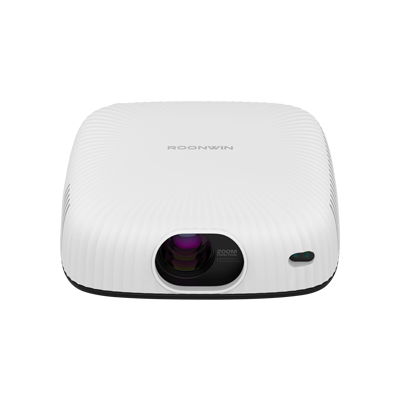
HN30A Portable - HN Series Projector

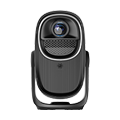
HN30B Portable - HN Series Projector


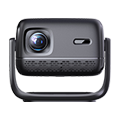
HW30 Home Cinema - HW Series Projector

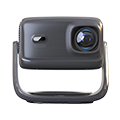
HW40 Home Cinema - HW Series Projector

HW45 Home Cinema - HW Series Projector


HI Gift Customization - HI Series Projector
The flexible innovation of PCBA (Printed Circuit Board Assembly) is reshaping the boundaries of electronic device design, driven by the growing demand for lightweight, deformable, and miniaturized electronics in consumer, automotive, medical, and aerospace industries. Unlike traditional rigid PCBs, flexible PCBA uses bendable, foldable, and even stretchable substrates such as polyimide (PI) and liquid crystal polymer (LCP), enabling electronic devices to adapt to complex spatial layouts and dyna
View moreThe application of 3D printing technology in PCBA manufacturing is revolutionizing traditional production workflows, offering unprecedented design flexibility, rapid prototyping capabilities, and cost savings for both small-batch customization and large-scale production. Unlike conventional subtractive manufacturing methods (e.g., CNC milling and etching) that generate significant material waste, 3D printing (additive manufacturing) builds PCBA layer by layer using conductive and dielectric mate
View moreNanotechnology is emerging as a transformative force in PCBA manufacturing, offering solutions to key challenges such as miniaturization, thermal management, conductivity, and reliability. By leveraging materials and processes at the nanoscale (1-100nm), PCBA can achieve unprecedented performance improvements, enabling the development of smaller, faster, and more durable electronic devices. The application of nanotechnology in PCBA is still in its growth phase, but its prospects are broad, with
View moreArtificial Intelligence (AI) is revolutionizing PCBA design by automating complex, time-consuming tasks, optimizing performance, and reducing errors, addressing the growing demand for more complex, customized, and high-reliability electronic products. Traditional PCBA design relies heavily on the experience of engineers, involving tedious steps such as component selection, routing, signal integrity (SI) analysis, and design verification—processes that are prone to human error and inefficiency, e
View moreBrightness and contrast are two core parameters for exhibition and display projectors, as exhibition venues usually have complex lighting conditions—from bright natural light during the day to dim ambient light at night—and the projected content varies from static pictures, text, and charts to dynamic videos and interactive content. High brightness ensures that the projected image is clearly visible even in bright environments, while high contrast makes the image layers richer, the colors more v
View moreThe mute effect is a key consideration for yoga studio projectors, as yoga is an activity that emphasizes tranquility, relaxation, and concentration, and any extra noise can disrupt the atmosphere of the studio and affect the practice experience of yoga practitioners. Unlike KTVs or gyms where background music or ambient noise can cover the projector’s noise, yoga studios are usually kept quiet, and even a small amount of noise from the projector can be clearly heard, breaking the calm state of
View moreClarity is the core requirement for gym projectors, as gyms usually need to display detailed content such as fitness tutorials, workout plans, real-time data, and instructor demonstrations, which require high-definition projection to ensure that every audience member can clearly see the details. Unlike other scenarios where blurry images may only affect the viewing experience, unclear projection in gyms may lead to incorrect exercise movements, increasing the risk of sports injuries. Therefore,
View moreThe lens is another key component that affects the projection effect, and its quality is closely linked to the projector's price. The lens is responsible for focusing the light emitted by the light source onto the projection screen, and its precision, material, and design directly determine the clarity, sharpness, and edge definition of the projected image. Low-priced projectors (below $500) usually use plastic lenses or low-grade glass lenses with simple processing technology. These lenses have
View moreProjection size is one of the important factors that users pay attention to when choosing a projector, and there is a certain correlation between it and the projector's price, mainly reflected in the projector's light source power, lens performance, and image processing capabilities. Low-priced projectors (below $500) are limited by the power of the light source and the quality of the lens, and their projection size is relatively small. Generally, the maximum projection size is 100 to 120 inches
View moreWith the popularization of 3D projection technology, more and more users pay attention to the 3D glasses compatibility of projectors, which is not only related to the viewing experience of 3D images, but also related to the additional cost of users. The compatibility of 3D glasses mainly depends on the 3D projection technology adopted by the projector, and there is a certain correlation between the projector's price and the type and compatibility of 3D technology. Low-priced projectors (below $5
View moreProjector automatic obstacle avoidance technology is an important manifestation of the intelligence of modern projectors, which solves the long-standing pain points of users in the process of using projectors and has extremely high practical value in daily use. In the actual use scenario, projectors often face various obstacles in the projection area, such as wall-mounted picture frames, sockets, switches, furniture, or even small objects such as books and decorations placed randomly. In the pas
View moreProjector screen adaptive technology is another important intelligent function that improves the user experience of projectors, which aims to solve the problem that the projection picture is difficult to match the screen size and shape, and the installation and adjustment are cumbersome. In the past, when using a projector with a screen, users needed to manually adjust the position, angle, and focal length of the projector to make the projection picture completely fit the screen, without edge ov
View more