Return to News Center
Projector Usage Guide
 Reviewed:0
Release time:2025-10-24
source:About Us
Reviewed:0
Release time:2025-10-24
source:About Us
Guide:
A projector usage guide serves as an essential resource for users to maximize the functionality and performance of their projectors. Whether for business presentations, home entertainment, or educational purposes, understanding how to use a projector effectively is crucial. First and foremost,

A projector usage guide serves as an essential resource for users to
maximize the functionality and performance of their projectors. Whether for
business presentations, home entertainment, or educational purposes,
understanding how to use a projector effectively is crucial.
First and foremost, familiarize yourself with the projector's physical
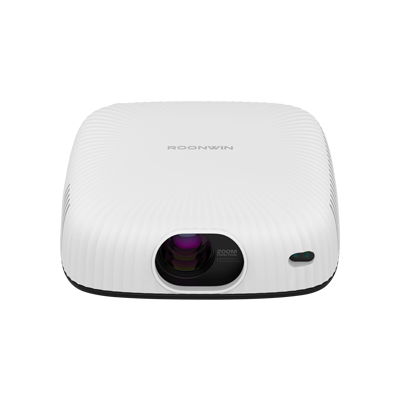
components. Locate the power button, input ports (such as HDMI, VGA, USB), focus
and zoom controls, and ventilation openings. Understanding these components will
help you connect devices and make necessary adjustments. Before powering on the
projector, ensure that all connections are secure. Connect your video source,
such as a laptop, Blu - ray player, or gaming console, to the appropriate input
port using the correct cable. For high - quality audio and video transmission,
HDMI cables are commonly recommended.
Once connected, power on the projector and the video source. Most
projectors take a few seconds to initialize. Use the remote control to access
the projector's menu. The menu typically allows you to adjust settings such as
image mode (e.g., cinema, presentation, game), brightness, contrast, color
temperature, and sharpness. Select the mode that best suits your content. For
example, the cinema mode is ideal for watching movies as it provides accurate
color reproduction, while the presentation mode enhances text clarity for
business slides.
Adjust the focus to make the image sharp. This can usually be done by
turning the focus ring on the projector lens. If the projector is not perfectly
perpendicular to the projection surface, the image may appear distorted. Use the
keystone correction feature, either manual or automatic, to adjust the image and
make it rectangular. The zoom function allows you to change the size of the
projected image. Some projectors offer digital zoom, while others have a
physical zoom lens.
During use, it's important to manage the projector's ventilation. Ensure
that the ventilation openings are not blocked to prevent overheating, which can
damage the projector. Avoid covering the projector with any objects while it's
in operation. When you're finished using the projector, turn it off properly.
Most projectors have a cooling fan that continues to run after the power is
turned off to dissipate remaining heat. Wait until the fan stops completely
before unplugging the power cable.
Read recommendations:
HN30B Portable - HN Series Projector
Outdoor-Environment Protected Projectors
Projectors with AI Voice Search and Control Functions