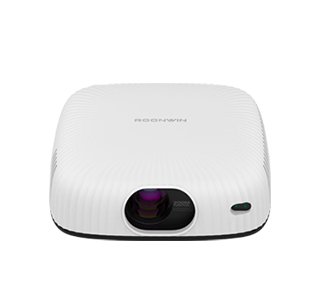
Projector-based Augmented Reality (AR) technology, also known as Spatial Augmented Reality (SAR), has emerged as a transformative force in bridging the physical and virtual worlds, eliminating the need for head-mounted displays and enabling immersive interactions across diverse fields. Unlike traditional AR systems that rely on personal devices to overlay virtual content on a user’s field of view, projector AR projects digital information directly onto real-world surfaces—ranging from flat screens to irregular objects and even entire spaces—creating a seamless fusion of reality and virtuality. This unique advantage makes it widely applicable in education, industry, art, and daily life, driving innovation and redefining user experiences.
In the education sector, projector AR is revolutionizing traditional teaching modes by turning abstract concepts into intuitive visual experiences. For example, in science classrooms, projectors can cast 3D models of cells, atoms, or planetary systems onto desks or walls, allowing students to observe and interact with these structures from multiple angles. Teachers can manipulate the virtual models in real time, adjusting sizes, showing internal structures, or simulating dynamic processes such as chemical reactions or biological growth. This not only enhances students’ understanding and memory but also fosters interactive and collaborative learning, as multiple students can engage with the same virtual content simultaneously. In vocational training, projector AR is used to simulate complex operations, such as equipment maintenance or surgical procedures, providing a safe and cost-effective training environment without the risk of damaging real equipment or endangering patients.
The industrial field benefits significantly from projector AR’s ability to overlay digital information onto physical equipment and workspaces. Engineers and technicians can use projector AR to display real-time data, blueprints, or maintenance guides directly on machinery, eliminating the need to refer to separate documents or devices. For instance, during the assembly of complex products, projectors can project step-by-step instructions onto the workbench and the components themselves, ensuring accuracy and reducing human error. In manufacturing, projector AR is used for quality inspection, with virtual overlays highlighting potential defects or deviations from specifications. Additionally, Shader Lamps, a specialized application of projector AR, can dynamically change the appearance of objects by projecting textures, colors, or shadows, allowing designers to visualize different product finishes without modifying the physical prototype.
Despite its rapid development, projector AR still faces technical challenges, such as ensuring precise alignment between virtual projections and physical surfaces, adapting to varying lighting conditions, and reducing shadows caused by users or objects. However, advancements in sensor technology, calibration algorithms, and light source efficiency are addressing these issues. Smart projectors equipped with cameras and tilt sensors can automatically adjust projections, eliminate shadows, and adapt to curved or irregular surfaces. The integration of AI and machine learning further enhances the technology’s adaptability, enabling real-time interaction and personalized content delivery. As projector AR continues to mature, it is expected to penetrate more industries, creating new possibilities for human-computer interaction and digital transformation.
Read recommendations:
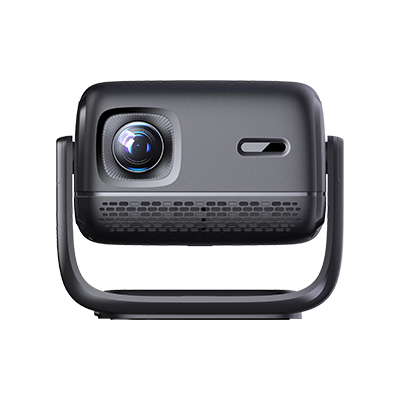
HI Gift Customization - HI Series Projector
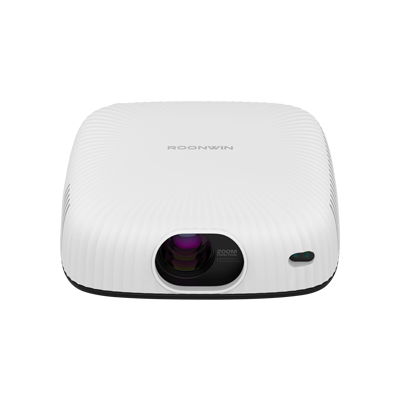
3d Projector with zoom function
Office Meeting Projectors
















 Reviewed: