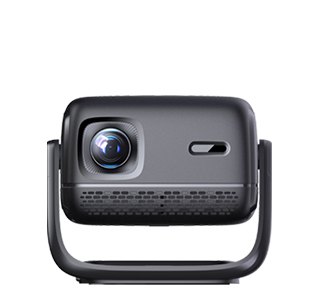
The improvement of quality standards in the projector industry is essential for ensuring product reliability, enhancing consumer trust, and promoting healthy industry development. As projector technology advances and applications become more diverse, quality standards must keep pace to address new challenges and meet evolving consumer demands. Quality standards in the projector industry cover a wide range of parameters, including brightness, resolution, color accuracy, contrast, durability, safety, and energy efficiency. By establishing and enforcing strict quality standards, manufacturers can improve product performance, reduce defects, and gain a competitive edge in the market.
One of the key areas of quality standard improvement is the standardization of brightness measurement. In the past, the projector industry suffered from inconsistent brightness labeling, with manufacturers using different measurement standards (such as ANSI lumens and CVIA lumens) and often overstating brightness values, leading to consumer confusion and dissatisfaction. To address this issue, industry associations and regulatory bodies have established unified brightness standards. For example, the China Video Industry Association (CVIA) launched the CVIA brightness standard in 2023, which provides clear specifications for brightness testing conditions and labeling. The CVIA standard requires that the measured brightness of a projector must be no less than 80% of the nominal value, under specific color temperature and color deviation conditions. This standard has significantly improved the accuracy of brightness labeling, with products adopting the CVIA standard showing a much higher compliance rate (far exceeding the 18% compliance rate of products using the older ANSI standard).
Color accuracy and display quality are also key focus areas for quality standard improvement. With the growing demand for high-quality image display in home theater, professional video editing, and digital signage applications, quality standards for color gamut, color accuracy, and contrast have become more stringent. International standards, such as the DCI-P3 and Rec. 2020 color gamuts, are now widely adopted by manufacturers, ensuring that projectors can reproduce accurate and vivid colors. Quality standards also include requirements for color consistency across different units of the same product, reducing variations in color performance. Additionally, standards for contrast ratio, which measures the difference between the brightest and darkest parts of an image, have been improved to ensure that projectors can deliver clear, detailed images in both bright and dark scenes.
Safety and durability are also important aspects of projector quality standards. Safety standards cover electrical safety, radiation safety (such as blue light protection), and fire safety, ensuring that projectors are safe to use in various environments. For example, the International Electrotechnical Commission (IEC) has established the IEC 62471 standard, which classifies the blue light hazard of display devices into four levels (RG0-RG3), with projectors required to meet the RG0 (no hazard) standard to ensure user eye safety. Durability standards include requirements for the lifespan of light sources, the robustness of the projector casing, and the reliability of internal components. For example, laser light sources are required to have a lifespan of at least 30,000 hours, and projectors must pass rigorous durability tests, such as vibration, impact, and temperature resistance tests, to ensure they can withstand daily use and transportation.
The improvement of quality standards in the projector industry is a collaborative effort involving manufacturers, industry associations, regulatory bodies, and consumers. Industry associations play a key role in developing and promoting quality standards, while regulatory bodies enforce compliance through inspections and certifications. Manufacturers are increasingly adopting quality management systems, such as ISO 9001, to ensure that quality standards are integrated into every stage of the production process. Additionally, consumer feedback is essential for identifying quality issues and driving standard improvements. As the projector industry continues to evolve, quality standards will continue to be updated to address new technologies and applications, ensuring that consumers receive high-quality, reliable products and promoting the sustainable development of the industry.
Read recommendations:
HW30 Home Cinema - HW Series Projector
Projector Mobile Compatibility
classroom 3d Projector















 Reviewed: