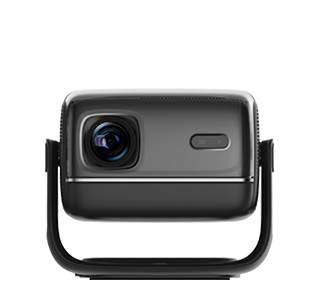
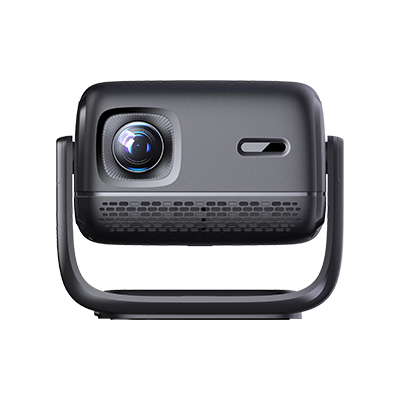
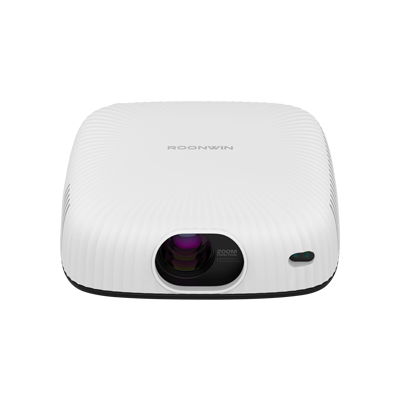
Projectors and electronic whiteboards are both important teaching tools in modern classrooms, and they play different roles in teaching applications, with their own advantages and applicable scenarios. Projectors have been widely used in teaching for a long time, and their core advantage is large-screen display, which can project teaching resources such as PPT, videos, pictures, and courseware onto a large screen, making it easier for all students in the classroom to see the teaching content clearly. Projectors are easy to use and low in cost; they can be connected to computers, U disks, and other devices to play various teaching materials, which is suitable for various teaching scenarios, from primary and secondary schools to universities, and from theoretical courses to practical courses. In addition, projectors can be used with projection screens or white walls, without requiring special equipment, which is convenient for popularization and application in remote areas or schools with limited funds.
However, the traditional projector has certain limitations in teaching interaction. It can only display pre-prepared teaching content, and teachers cannot write, annotate, or modify the content directly on the projected screen. If they need to add notes or explain key points, they need to use a blackboard or a separate whiteboard, which reduces the teaching efficiency and the interactivity between teachers and students. With the development of technology, intelligent projectors with touch functions have appeared, which can realize simple writing and annotation functions by cooperating with touch screens, but their touch accuracy and writing experience are still not as good as electronic whiteboards.
Electronic whiteboards, as an upgraded teaching tool, integrate display, writing, and interaction functions, which have greatly improved the interactivity of classroom teaching. Electronic whiteboards usually have a touch screen, and teachers can write, draw, annotate, and modify teaching content directly on the whiteboard with a stylus, just like writing on a traditional blackboard. At the same time, electronic whiteboards can be connected to computers and the Internet, and can directly call online teaching resources, play videos, and conduct real-time interaction with students. For example, teachers can invite students to come to the whiteboard to write and answer questions, or use the interactive functions of the whiteboard to carry out group discussions and classroom games, which can stimulate students' learning interest and improve classroom participation.
In practical teaching applications, projectors and electronic whiteboards are often used in combination. Projectors are used to display large-screen teaching content, and electronic whiteboards are used to realize interactive operations such as writing and annotation, complementing each other to improve teaching effect. For example, in a math class, teachers can use a projector to display math formulas and graphs, and use an electronic whiteboard to write problem-solving steps and annotate key points; in a language class, teachers can project text materials and use an electronic whiteboard to mark new words and explain grammar points. In addition, electronic whiteboards have the function of saving and sharing teaching content, which is convenient for teachers to sort out teaching notes and share them with students after class, while projectors are more flexible in terms of portability and can be used in temporary teaching venues or outdoor teaching activities.
Read recommendations:
HW45 Home Cinema - HW Series Projector
Wall-mounted Embedded Projector
How to Choose the Right Projector Resolution












 Reviewed: