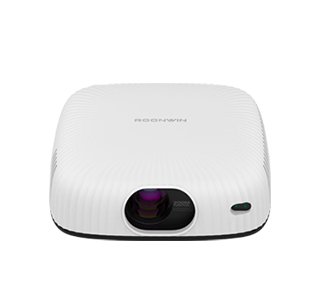
1. Industry Pain Point Analysis: Core Processing Challenges of Traditional
Projector Focusing
In projection application scenarios such as commercial office, home
audio-visual, exhibition display and mobile presentation, focusing stability is
the core key that determines image presentation effect and equipment user
experience. Most traditional projectors rely on manual focus and fixed focus
modes, which have long-standing technical defects and usage pain points in
practical application, becoming a major obstacle to the upgrading of projection
experience. Under traditional focusing modes, any minor variables such as
equipment displacement, placement angle deviation, projection distance change,
ambient temperature and humidity fluctuation, and fuselage thermal deformation
will directly lead to image blurring, edge defocusing, focus offset and local
out-of-focus, greatly affecting the visual effect and professionalism of movie
watching, meetings and exhibitions.
From the perspective of practical scenario processing difficulties,
traditional projector focusing has three core shortcomings. First, it has strong
limitations in static focusing. After fixed installation, the equipment cannot
adapt to scenario changes. Once the device is moved, the projection wall is
replaced, or the projection size is adjusted, manual repeated fine-tuning of the
focus ring is required, which is cumbersome and time-consuming and seriously
reduces work efficiency. Second, dynamic defocusing cannot self-recover. After
long-term operation, the lens of the optical machine undergoes slight thermal
deformation, which easily causes thermal focus shift and gradual image blurring,
requiring secondary manual calibration and frequently interrupting meetings and
viewing processes. Third, it has poor adaptability to complex environments. In
strong light environments, rough walls, special-shaped projection surfaces and
oblique projection scenarios, the recognition accuracy of traditional focusing
algorithms drops significantly, easily causing focusing failure, repeated
focusing jitter and local blurring, lacking intelligent error correction and
adaptive processing capabilities. Targeting the above common industry pain
points, the Auto-focus Projector complete solution builds a full-process,
full-scenario and fully automatic focus processing system with intelligent
hardware perception and AI algorithm processing, completely solving the industry
problems of cumbersome operation, insufficient accuracy, poor stability and weak
adaptability of traditional projector focusing.
2. Solution Core Architecture: Dual-Mode Intelligent Perception and
Closed-Loop Focus Processing System
This automatic focus solution abandons the backward single-image contrast
focusing mode of traditional projectors, adopts the industry-leading dual-module
fusion processing architecture of TOF laser ranging + CMOS image recognition,
and is equipped with self-developed AI dynamic focusing algorithms to form a
closed-loop intelligent processing process of
"perception-calculation-calibration-recheck-stabilization". It realizes
millisecond-level precise focusing, dynamic adaptive calibration and
full-scenario intelligent error correction, and fundamentally solves various
focusing abnormal problems from the technical root. The whole solution operates
fully automatically without manual intervention, balancing instantaneous
focusing speed and long-term focusing stability, and adapts to various
projection scenarios such as fixed installation, frequent movement and complex
environments.
At the hardware perception level, the solution is equipped with a
high-precision TOF time-of-flight laser ranging array, which accurately detects
the precise distance between the projector and the projection surface through
multi-point laser scanning, completes multiple distance samplings per second,
accurately captures millimeter-level displacement and distance changes, predicts
the focus offset trend in advance, and realizes proactive focus compensation.
Compared with the passive processing mode of traditional focusing that only
identifies image clarity, TOF laser ranging can actively perceive spatial
variables, free from the interference of ambient light and wall materials, and
maintain accurate perception in special scenarios such as dark light, strong
light, frosted walls and special-shaped curved surfaces, avoiding focusing
failure from the source. Meanwhile, it is equipped with a high-definition CMOS
image sensor to collect real-time full-domain image pixel information, and
accurately determine the lens position corresponding to the optimal image focus
through gray matrix variance calculation, edge sharpness detection and pixel
detail comparison, realizing two-way calibration of distance data and image
quality.
At the algorithm processing level, the solution is equipped with an
upgraded iterative AI intelligent focus processing algorithm to build a refined
focus logic system. The system can automatically distinguish four major
scenarios: power-on initial focusing, displacement focusing, thermal focus
compensation and environment adaptive focusing, match different calibration
parameters and operation logics, and targetedly handle various focusing
problems. The initial power-on focus adopts a two-step processing of fast coarse
focusing + precise fine focusing, completing ultra-clear image focusing within
0.5 seconds with instant clarity after power-on without waiting. Slight
equipment displacement and angle adjustment trigger dynamic micro-focus
processing with small-range lens focal length calibration, realizing seamless
and non-stuttering adjustment. Aiming at the thermal focus shift problem caused
by long-term operation, the system integrates a temperature-linked compensation
mechanism to real-timely monitor the temperature change of the optical machine
and dynamically correct the focus offset caused by lens deformation to achieve
long-term focus stability. For complex scenarios such as oblique projection,
curved surface projection and uneven walls, the algorithm supports zonal focus
processing to independently optimize edge and corner details of the image, solve
the common problem of local defocusing, and ensure uniform clarity of the
full-screen image.
3. Targeted Processing of Core Problems: Accurately Solve Various Focusing
Faults
The Auto-focus Projector automatic focus solution provides a one-stop
closed-loop processing scheme for high-frequency focusing faults in traditional
projector use, covering four core usage scenarios: static focusing, dynamic
stability focusing, complex adaptation and long-term stability, comprehensively
optimizing the focusing experience and eliminating all kinds of image blurring
problems.
First, automatic displacement focus processing solves the problem of
cumbersome focusing in mobile use. For frequent operations such as mobile
office, home moving and temporary scenario switching, the solution supports
real-time displacement sensing and automatic focus tracking. After any minor
displacement of the equipment, the system instantly triggers the focusing
program to quickly reset the focal length without manual operation, completely
abandoning the cumbersome operation of "adjusting once per movement" of
traditional projectors. It perfectly adapts to flexible usage scenarios such as
temporary meetings, outdoor presentations and dormitory home use, greatly
improving equipment convenience.
Second, intelligent thermal focus shift compensation processing solves the
problem of gradual image blurring during long-term operation. After 1-2 hours of
continuous operation, traditional projectors suffer from lens structural
deformation due to optical machine heating, which easily causes gradual image
blurring and focus offset, a common industry problem difficult to eradicate.
This solution is equipped with an intelligent temperature-controlled focusing
system, which real-timely links the heat dissipation module and focusing module
to dynamically calibrate focal length parameters according to equipment
operating temperature changes, continuously offsetting focus errors caused by
thermal deformation. It maintains clear and stable images without blurring or
offset after 7×24-hour continuous operation, perfectly adapting to
high-intensity usage scenarios such as long-term enterprise meetings,
all-weather exhibition displays and continuous commercial playback.
Third, optimized focus processing for complex scenarios solves the problem
of focusing failure in special environments. Traditional focusing systems are
prone to focusing failure, uneven virtual and real images, and repeated focusing
jitter in complex scenarios such as strong light backlight, dark light
environment, rough walls, wrinkled screens, oblique projection and curved
surface projection. Through the dual-mode complementation of laser ranging and
image recognition, this solution weakens the interference of ambient light and
projection media, and is equipped with an AI scenario adaptive algorithm to
automatically identify the current projection environment and match
corresponding focusing thresholds and calibration accuracy, realizing precise
focusing in complex scenarios and ensuring image texture and clarity in various
unconventional scenarios.
Fourth, imperceptible continuous recheck processing ensures full-process
focus stability. The whole system supports an intelligent sleep recheck
mechanism. When the equipment operates normally without displacement and large
temperature fluctuation, it monitors the focus state with low power consumption
without occupying operating computing power. Once minor changes in distance,
temperature or image clarity are detected, imperceptible fine-tuning is
immediately started with no screen flicker or focus jitter during the whole
process, continuously ensuring ultra-clear image quality without user
perception, completely solving the problems of focusing lag and abrupt
calibration of traditional projectors.
4. Solution Implementation Advantages: Comprehensively Upgrading Projection
User Experience
Compared with traditional manual focusing and ordinary automatic focusing
solutions, the Auto-focus Projector automatic focus solution has core advantages
of faster speed, higher accuracy, stronger stability, wider adaptability and
lower operation and maintenance cost, realizing comprehensive upgrades from four
dimensions: operation experience, image quality, scenario adaptation and
long-term use. In terms of focusing speed, it achieves second-level ultra-fast
focusing with instant calibration after power-on, displacement and environmental
changes, eliminating manual debugging waiting and greatly improving office and
viewing efficiency. In terms of focusing accuracy, millimeter-level ranging
combined with pixel-level image calibration ensures sharp text, clear details,
no edge blurring or serration, and consistent ultra-high-definition image
quality.
In terms of user convenience, it realizes a true "fully automatic
unattended" focusing experience, completely free from manual intervention, easy
to operate for all user groups without professional debugging skills. Meanwhile,
the solution is compatible with all core functions such as trapezoidal
correction, image scaling and intelligent screen projection, with no impact on
image proportion, imaging size and no image quality loss or deformation during
focusing calibration, ensuring stable function linkage. In terms of long-term
stability, triple protection of temperature compensation, dynamic recheck and
intelligent error correction completely eradicates persistent industry problems
such as thermal focus shift, displacement defocusing and environmental focusing
failure, greatly reducing time and labor costs for equipment debugging, fault
troubleshooting and after-sales operation and maintenance.
In addition, the whole solution has strong compatibility, adaptable to all
categories of projection equipment such as home smart projectors, commercial
office projectors, laser high-definition projectors and portable mobile
projectors, supporting adaptive calibration of models with different brightness,
resolution and projection ratios. It can be widely applied to various industries
such as home furnishing, enterprise, education, cultural tourism and exhibition
as a standard configuration or upgrade solution, possessing both universality
and professionalism and becoming the most efficient and systematic solution to
projector focusing problems at present.
5. Scenario Implementation and Application: Fully Adapting to Diverse Usage
Requirements
In home audio-visual scenarios, the solution completely optimizes the home
viewing experience. Users can move the projector position and adjust the
placement height at will, and the equipment can complete automatic focusing
quickly. No repeated equipment debugging is required for daily cleaning and
furniture moving, ensuring clear and stable images throughout viewing, drama
watching and parent-child entertainment. It adapts to diurnal light changes and
wall material differences, eliminating common home focusing blurring problems
and creating an immersive private theater experience.
In commercial office and education scenarios, the solution perfectly adapts
to high-frequency and high-intensity usage needs. In enterprise meetings,
employee training and classroom teaching, the equipment operates with frequent
movement and long continuous working hours. The system can automatically
compensate for thermal focus shift and adapt to scenario changes, maintaining
clear images throughout the process without repeated manual debugging, avoiding
interruptions of meeting and teaching rhythm caused by image blurring and
focusing stuttering, and greatly improving office and teaching efficiency and
professionalism.
In exhibition display, outdoor cultural tourism and commercial lighting
scenarios, the solution gives full play to its advantages in complex environment
adaptation. Facing harsh conditions such as strong exhibition light, outdoor
temperature difference, special-shaped projection surfaces and all-weather
continuous operation, the dual-mode focusing system stably outputs
high-precision images without focusing failure or image blurring, ensuring the
visual texture of commercial displays, light and shadow shows and outdoor
promotions, and boosting the quality upgrading of high-end commercial
scenarios.
6. Solution Conclusion: Reconstruct Ultra-Clear Projection Experience with
Intelligent Focus Processing
Targeting the core pain points of traditional projectors including
cumbersome focusing, insufficient accuracy, poor stability and weak scenario
adaptation, the Auto-focus Projector automatic focus solution builds a fully
automatic, high-precision, high-stability and full-scenario focus processing
system through TOF + CMOS dual-mode perception architecture and AI intelligent
algorithm processing. It comprehensively solves various focusing faults from
instantaneous ultra-fast focusing, dynamic displacement focus tracking and
intelligent thermal focus shift compensation to adaptive complex environment
processing and long-term stable recheck, realizing full-process ultra-clear
images and seamless stable operation of projection equipment.
With technological innovation simplifying operation processes and
intelligent processing replacing manual operation, the whole solution improves
image imaging quality while greatly reducing equipment operation and maintenance
costs and usage thresholds. It adapts to the landing needs of home, commercial,
education, cultural tourism and other full scenarios, providing a mature,
efficient and reliable focusing solution for all types of projection equipment.
It redefines the focusing standards of smart projectors, ensuring clear, extreme
and stable presentation for every projection experience.
Read recommendations:
HW30 Home Cinema - HW Series Projector
Projectors with USB Interface
How Effective is Projector HDR Technology














 Reviewed: