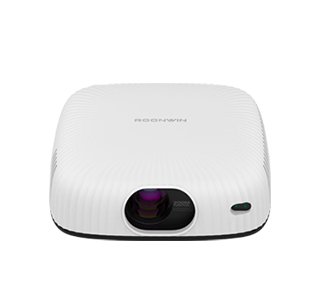
With the comprehensive popularization of commercial office, smart home, and
immersive audio-visual scenarios, built-in projectors have gradually replaced
traditional external projection equipment and become the mainstream market
choice due to their core advantages of integrated integration, minimalist
installation, space saving and strong adaptability. As a core hub connecting the
upstream production end and downstream terminal market, Built-in Projector
Distributor’s product competitiveness, channel reputation and market
profitability fundamentally depend on the comprehensive quality of the core
substrates of built-in projectors. As the underlying carrier for the imaging,
heat dissipation, weather resistance and stable operation of built-in
projectors, substrates include optical imaging substrates, structural support
substrates and heat dissipation protection substrates. The material selection,
craftsmanship and performance parameters of each type of substrate directly
determine the service life, imaging effect and user experience of terminal
products, and serve as the core foundation for distributors to take root in the
industry, expand the market and maintain customers. From the perspective of core
substrates, this paper deeply analyzes the selection criteria, performance
value, industry pain points and channel empowerment logic of built-in projector
substrates, providing a core reference for Built-in Projector Distributor to
build a high-quality product system and consolidate market competitiveness.
Different from traditional external projectors, built-in projectors adopt
an integrated embedded design with a more compact body and higher integration of
internal components, which puts forward far stricter requirements on the
lightweight, high precision, stability and adaptability of substrates than
traditional equipment. Traditional projectors focus on core lens and light
source parameters, while as embedded terminals, built-in projectors need to
adapt to diverse installation scenarios such as ceiling, wall and cabinet. They
often operate in closed or semi-closed environments, prone to heat accumulation,
moisture, slight deformation and other problems. Therefore, the comprehensive
performance of substrates has become the core indicator to determine product
quality, as well as the key assessment dimension for Built-in Projector
Distributor to screen supply chains and layout product matrices. At present,
most distributors in the industry fall into the homogenization price war mainly
because they ignore the core value of substrates and only focus on equipment
parameters and appearance, resulting in high failure rate, rapid imaging
attenuation and high after-sales cost of terminal products, which seriously
affects channel reputation and long-term profit space.
Divided by core functional dimensions, the substrates of built-in
projectors are mainly classified into three core categories: optical imaging
substrates, structural support substrates and heat dissipation protection
substrates. These three types of substrates perform their respective functions
and cooperate with each other to jointly determine the core quality of terminal
products, and are also the key to differentiated competition for Built-in
Projector Distributor. First of all, as the core carrier of the built-in
projector imaging system, optical imaging substrates cover optical PET films,
high-definition optical glass, microcrystalline light-transmitting substrates,
lens substrates and others, which directly determine the core imaging indicators
of equipment such as light transmittance, color reproduction, definition and
anti-light screen effect. With the popularization of 4K ultra-high definition,
laser short-throw and ALR anti-light projection technologies, the market
requirements for optical substrates continue to upgrade. High-quality optical
substrates need to meet a visible light transmittance of more than 92% and an
ultra-low haze of less than 0.8%, while possessing excellent dimensional
stability with a thermal shrinkage rate of no more than 0.3% at 150℃, which can
effectively avoid imaging blurring, picture offset and other problems caused by
substrate deformation due to long-term high-temperature operation.
At present, high-end built-in projectors generally adopt biaxially oriented
polyethylene terephthalate (BOPET) optical substrates and high-transmittance
microcrystalline glass substrates. These substrates feature high purity, few
impurities and excellent optical uniformity, which can accurately restore color
layers and eliminate picture distortion, ghosting, halo and other problems,
perfectly adapting to high-end scenarios such as household high-definition
audio-visual, commercial conferences and teaching displays. In contrast, low-end
products mostly adopt ordinary plastic substrates and low-purity glass
substrates with a light transmittance of less than 85% and high haze, which are
prone to yellowing, atomization, light transmission attenuation and other
problems after long-term use, leading to poor imaging effect and greatly
shortened service life. For Built-in Projector Distributor, selecting products
with high-quality optical substrates can fundamentally solve core terminal
customer pain points such as blurry pictures, color deviation and poor
anti-light performance, greatly improve customer satisfaction, build
differentiated product advantages, and get rid of the involution of low-end
price wars.
Secondly, structural support substrates mainly include body shell
substrates, internal bracket substrates and fixed connection substrates, which
are responsible for ensuring the structural stability, installation adaptability
and lightweight characteristics of the whole built-in projector. Most built-in
projectors are embedded and installed, fixed on ceilings, walls and intelligent
cabinets for a long time. The substrates are required to have high strength,
deformation resistance, lightweight, easy processing and strong adaptability,
and meet the dimensional accuracy requirements of different installation
scenarios. At present, the mainstream high-quality structural substrates in the
industry are glass fiber composite substrates, aerospace-grade aluminum alloy
substrates and high-strength ABS composite substrates. Among them, glass fiber
composite substrates have become the core structural substrates of
mid-to-high-end built-in projectors due to their advantages of high temperature
resistance, deformation resistance, dimensional stability, moisture resistance
and corrosion resistance. Adopting a high-density glass fiber mesh composite
structure, the substrate builds a stable framework for the equipment. Even in
long-term high-temperature, humid and closed operating environments, it will not
deform, crack or loosen, with a flatness error far lower than the industry
general standard, ensuring long-term stable installation and error-free
operation of the equipment.
Aerospace-grade aluminum alloy substrates feature lightweight, high
hardness and easy heat dissipation, with both texture and practicality, suitable
for high-end smart home and high-end commercial scenarios. In contrast, low-end
products mostly adopt ordinary recycled plastics and low-quality thin iron
sheets as structural substrates, which have low hardness and poor toughness.
They are prone to deformation, aging and brittle cracking under long-term heat,
easily causing equipment loosening and falling risks, as well as internal light
path offset and lens dislocation, greatly increasing equipment failure rate and
after-sales maintenance costs. For Built-in Projector Distributor, the quality
of structural substrates is directly related to product stability and
after-sales costs. Products with high-quality structural substrates can reduce
the equipment repair rate by more than 80%, greatly reduce channel after-sales
workload, improve product reputation and repurchase rate, and serve as a core
guarantee for long-term operation of distributors.
Finally, as the "protective barrier" for the stable operation of built-in
projectors, heat dissipation protection substrates include thermal conductive
silica gel substrates, heat dissipation graphite sheets, thermal insulation
protection substrates, moisture-proof insulating substrates and others, which
are the core key to solving the problems of heat accumulation, aging and short
circuit of embedded equipment. Built-in projectors have high integration and
closed installation space. The light source, main board and lens continuously
generate heat during operation. If the heat dissipation substrate performance is
insufficient, heat cannot be dissipated in a timely manner, causing
high-temperature frequency reduction, brightness attenuation, color distortion
of the equipment, even burnout of the main board and accelerated aging of the
light source, and greatly shortening the service life of the equipment.
High-quality heat dissipation substrates are required to have high thermal
conductivity, high temperature resistance, insulation, moisture resistance and
high fitting degree. Among them, high-purity graphite heat dissipation
substrates have excellent thermal conductivity, which can quickly and evenly
export the heat of the whole machine. Combined with flexible thermal conductive
silica gel substrates, they can closely fit heating components, eliminate heat
dissipation dead angles, and ensure long-term continuous operation of equipment
without high-temperature faults.
Meanwhile, high-quality thermal insulation substrates can effectively
isolate the influence of external temperature differences, avoid condensed water
vapor inside the equipment, and prevent circuit short circuit and leakage
hazards in humid environments when matched with moisture-proof insulating
substrates, adapting to complex installation scenarios such as home kitchen and
bathroom, humid office areas and shopping mall atriums. In contrast, low-end
products mostly adopt inferior ordinary silica gel and recycled graphite
materials with poor thermal conductivity and easy aging and falling off. The
heat dissipation performance declines significantly after half a year of use,
leading to frequent equipment failures and seriously affecting the terminal user
experience. Facing various terminal user pain points, Built-in Projector
Distributor can effectively solve the core problems of short service life,
frequent faults and poor stability of terminal equipment by prioritizing the
layout of built-in projector products with high-quality heat dissipation and
protection substrates, and consolidate channel brand reputation.
From the perspective of industry development trends, built-in projectors
are iterating towards high definition, ultra-thinness, intelligence and
long-term stability. The market requirements for comprehensive substrate
performance continue to upgrade, and substrate quality has become the core
watershed for industry reshuffling and channel survival of the fittest. At
present, the domestic projection substrate industry is developing rapidly. The
domestic production capacity of high-end core materials such as optical-grade
BOPET films, high-strength glass fiber composite substrates and high-purity heat
dissipation substrates continues to expand. Leading domestic enterprises such as
Dongcai Technology and Aerospace Rainbow have broken the long-term monopoly of
overseas brands in the high-end substrate market, providing Built-in Projector
Distributor with high-cost performance and high-quality supply chain options,
and greatly reducing the channel layout cost of high-end products.
At the same time, the downstream market demand continues to expand. In
2024, the domestic projection equipment market scale grew steadily, among which
the sales volume of built-in embedded projectors increased by more than 15%
year-on-year. The popularization of smart home, smart campus, smart office and
immersive commercial scenarios has driven the continuous rise in demand for
high-end built-in projectors with high substrate quality. Terminal customers
have shifted from simply focusing on equipment prices and basic parameters to
paying attention to comprehensive performances such as imaging quality,
operation stability, service life and scenario adaptability, and substrate
quality has become an invisible core standard for customer selection. This means
that the previous distributor model of relying on low-price sales and ignoring
substrate quality will be gradually eliminated by the market. Built-in Projector
Distributors focusing on high-quality substrates, long-term stability and
high-adaptability products will continue to seize high-end market shares and
achieve differentiated profitability.
For Built-in Projector Distributor, substrate-oriented thinking is the core
business thinking for long-term market cultivation and the core source of
channel competitiveness. In the context of intensified industry homogenization
competition, distributors do not need to fall into endless price involution, but
take substrates as the core screening standard to build a differentiated product
system: focus on high-end optical substrates to ensure imaging texture, rely on
high-strength structural substrates to ensure equipment stability, and leverage
high-quality heat dissipation protection substrates to extend product life, so
as to fundamentally improve the comprehensive competitiveness of terminal
products. Meanwhile, take substrate quality as the core to create product
selling points, output the product value of "substrate determines quality, and
quality determines experience" for terminal customers, distinguish from peer
low-cost and low-quality products, and establish clear differentiated brand
cognition.
In addition, built-in projector products supported by high-quality
substrates feature lower after-sales failure rate, longer product life cycle and
higher customer reputation, which can help distributors greatly reduce operating
costs and improve customer repurchase and referral rates, gradually accumulating
channel reputation assets. In the future, with the implementation of 8K
ultra-high definition, laser holographic projection and intelligent adaptive
projection technologies, projection substrates will continue to iterate towards
high precision, high light transmittance, high stability, lightweight and
environmental protection. Only by continuously focusing on substrate upgrading,
keeping up with substrate technology iteration, and accurately matching terminal
scenario demands, can Built-in Projector Distributor continuously consolidate
channel core advantages, gain a firm foothold in the industry upgrading wave,
achieve sustainable profitability, and realize long-term and stable large-scale
development.
Read recommendations:
HW40 Home Cinema - HW Series Projector
Projector with bluetooth 5.3
Usage Method of Projector Wireless Screen Mirroring Device














 Reviewed: