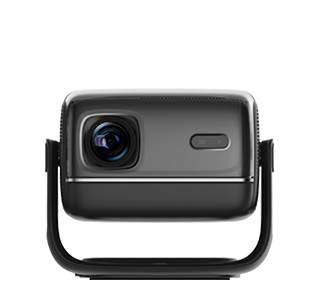
Brightness is the core parameter that determines the presentation effect of commercial projectors in office meetings, business exhibitions, and outdoor publicity scenarios, but false brightness marking has become a common pitfall in the commercial projector market, confusing countless corporate purchasers and individual business users. Many inferior merchants falsely label the brightness parameters of low-end projectors, marking ordinary 2000-3000 lumen products as 5000, 6000 or even higher lumens through virtual standard conversion and parameter falsification. Ordinary users lack professional identification methods and tend to judge product quality only by the marked brightness value, which leads to the purchased projectors being unable to present clear pictures in bright office environments, seriously affecting meeting efficiency and business display effects.
To avoid the trap of false brightness marking, users must first distinguish the two core brightness standards of commercial projectors: ANSI lumens and LED lumens. Formal mainstream brands uniformly adopt ANSI lumen testing standards, which test the effective brightness of the projector in a standard dark environment with uniform light distribution, and the data is true and credible. However, many miscellaneous brands use LED lumens, peak lumens and other non-uniform standards for false marking. The peak brightness value is often 2-3 times the actual effective brightness, which looks impressive on the parameter page but will have serious light attenuation and blurry pictures in actual bright office use. In addition, some merchants will deliberately avoid marking the effective brightness and only promote the maximum brightness in publicity, which is a typical false marking routine.
There are multiple practical identification methods to help users screen high-quality commercial projectors and avoid false marking traps. First, prioritize products with official ANSI lumen certification and detailed parameter test reports, and reject products with ambiguous brightness standards. Second, pay attention to the actual use effect: genuine high-brightness commercial projectors can still present clear text, smooth pictures and high color restoration in indoor bright light or even weak natural light environments, while falsely marked products will have faded colors, blurred text and dark overall pictures once the ambient light increases. Third, focus on brand credibility and after-sales guarantee. Regular big brands have standardized parameter calibration and strict quality inspection, while no-name products often have serious parameter virtual standards. For corporate procurement, choosing officially certified commercial projectors can effectively avoid economic losses and ensure stable and long-term meeting and business display effects. Read recommendations:
HW30 Home Cinema - HW Series Projector
Projectors with Stereoscopic 3D Effect
2G Projector solution











 Reviewed: