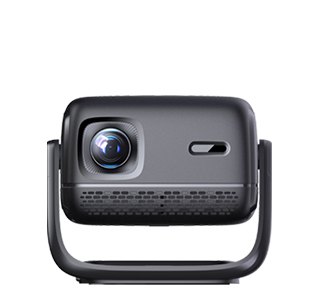
Projectors and holographic projection equipment are two distinct display technologies, with fundamental differences in working principles, display effects, application scenarios, and cost, which determine their respective market positioning and user groups. In terms of working principles, traditional projectors (including smart mini projectors) adopt the principle of "image projection", which projects the processed image onto a flat surface (such as a projection screen, wall) through a lens, relying on the reflection of light to form a two-dimensional or pseudo-three-dimensional image. Its core components include light sources, display chips (DLP, 3LCD, LCoS), and lenses, and the display effect is affected by the projection surface, ambient light, and brightness. For example, indoor home projectors need to consider ambient light interference, so they often improve brightness to ensure image clarity, while classroom projectors focus on uniform brightness and large projection size to meet the viewing needs of multiple people.
Holographic projection equipment, on the other hand, relies on the principles of light interference and diffraction to record and reproduce the light wave information of objects, thereby forming a true three-dimensional image that can be viewed from multiple angles without relying on any projection surface. Its working process is divided into two stages: recording (filming) and reproduction. The recorded light wave information is reproduced through diffraction, making the image appear to be suspended in the air, with a strong sense of immersion and reality. In terms of display effects, projectors can only present flat images, and the sense of three-dimensionality needs to be realized through image processing technology, which is far less realistic than the three-dimensional effect of holographic projection. In terms of application scenarios, projectors are widely used in home entertainment, education, meetings, and other daily scenarios due to their low cost, mature technology, and simple use. Holographic projection equipment, due to its high technical difficulty and high cost, is mainly used in high-end scenarios such as large-scale events, commercial promotions, medical training, and architectural simulation. In addition, holographic projection equipment is divided into multiple types such as handheld, desktop, and large-scale, while projectors are mainly classified according to application scenarios and light sources, showing obvious differences in product forms and functional positioning.
Read recommendations:
HN30A Portable - HN Series Projector
3d Projector customization
Bedroom Headboard Projector











 Reviewed: