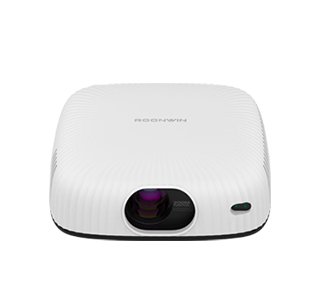
A holographic projector is an advanced optoelectronic display device that differs fundamentally from traditional projection equipment, adopting laser holographic imaging technology to restore real three-dimensional light field images. Unlike ordinary projectors that only project flat two-dimensional pictures on a screen, holographic projectors can present stereoscopic, floating 3D images in the air without relying on flat display media such as screens and curtains. This technology records the amplitude and phase information of object light waves through laser interference and diffraction principles, and reconstructs complete three-dimensional visual effects during projection, making the displayed objects have realistic depth, layering and spatial perception. It is a core display device in the field of immersive visual technology.
The working principle of holographic projectors is based on optical holography and spatial light modulation technology. The whole imaging process is divided into two core stages: hologram recording and holographic reproduction. In the recording stage, the laser light source is divided into object light and reference light. The object light irradiates the target object, reflects light waves carrying the object’s morphological information, and interferes with the reference light on the photosensitive medium to form a hologram containing all spatial information of the object. In the reproduction stage, the holographic projector uses a specific laser light source to irradiate the hologram, diffracts and reconstructs the original object light wave field, and finally presents a lifelike three-dimensional floating image in the air. The whole process restores the real light propagation state of the object, so the image has no visual dead angle and strong stereoscopic sense.
Holographic projectors have unique technical advantages that traditional projectors cannot match. First, they support naked-eye 3D viewing, requiring no 3D glasses or other auxiliary equipment, which greatly improves the viewing comfort and interactive experience. Second, the imaging is suspended in the air, with ultra-high spatial fidelity, and the image can be viewed from multiple angles without distortion and blur. In addition, holographic projection images have high resolution, high contrast and strong anti-interference ability, and can still maintain clear display effects in bright light environments. Some intelligent holographic projectors are also equipped with human-computer interaction functions, which can realize real-time interaction between viewers and floating images, expanding the application boundary of display equipment.
With the continuous maturity of technology, holographic projectors have been widely used in multiple professional fields. In commercial exhibitions and brand promotion, they are used to display product stereoscopic models, attracting audience attention and improving the display grade. In the field of education and scientific research, they help teachers demonstrate complex three-dimensional structures such as human anatomy and mechanical principles, making abstract knowledge intuitive and easy to understand. In museums and exhibition halls, holographic projectors restore historical figures and cultural relic scenes to realize immersive cultural display. In addition, they also have important application value in stage performances, medical imaging, virtual simulation and other fields, becoming an important carrier of digital virtual display technology.
Read recommendations:
HW40 Home Cinema - HW Series Projector
1080P Projector for Home Theater
Education & Teaching Specialized 350 Projector















 Reviewed: