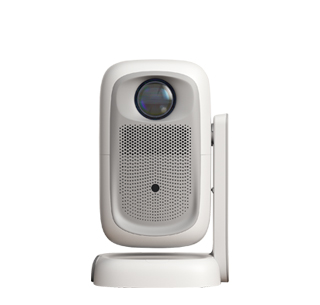
The core principle for selecting a high-brightness commercial integrated
projector system is "matching brightness to scenarios, balancing performance
with cost and stability". It is necessary to make a comprehensive judgment based
on usage scenarios, ambient light intensity, content requirements, budget input
and long-term operating costs, avoiding the pitfalls of "false peak brightness
labeling", "redundant functions" and "neglecting environmental adaptability".
The following breaks down the selection logic from core dimensions to help you
accurately lock in a suitable high-brightness solution.
I. Determine the Scenario First: Anchor the Baseline of Core Needs
Differences in commercial scenarios directly determine the direction of
system configuration. It is essential to first clarify the core usage conditions
before selecting corresponding parameters.
1. Space and Ambient Light Conditions
Space area and ambient light intensity are the core bases for selecting
high-brightness integrated projectors, as their primary advantage lies in
resisting screen "washout" under strong light. For brightly lit open exhibition
halls (ambient light: 500-800 lux), large auditoriums, outdoor projection
scenarios and semi-open event venues, high-brightness integrated projectors
(usually ≥ 4800 ISO lumens) are a must. For spaces with partial shading such as
medium-sized conference halls (ambient light: 300-500 lux), 4000-4800 ISO lumens
models can balance clarity and visual comfort; while fully shaded audio-visual
rooms and small negotiation rooms do not require high-brightness configurations,
avoiding excessive brightness and eye fatigue. Meanwhile, pay attention to the
installation and environmental adaptability of high-brightness models: fixed
scenarios such as long-term exhibitions can adopt embedded laser high-brightness
engineering projectors, which feature dustproof and heat-dissipating designs;
mobile scenarios such as temporary events should prioritize portable
high-brightness models (weight ≤ 8kg) with stable light sources. For outdoor or
harsh environment applications, choose models with IP5X+ dustproof rating and
sealed optical engines to resist moisture, dust and temperature
fluctuations.
2. Content Presentation Requirements
Static content (PPTs, design drafts, engineering drawings) focuses on
resolution and color reproduction, while dynamic content (video promotions,
interactive demonstrations) emphasizes response speed and contrast. Professional
design and art exhibitions require high color gamut (DCI-P3 95%+) and high color
accuracy (ΔE < 1); ordinary business presentations only need 1080P native
resolution and sRGB 90%+ color gamut; large giant screen displays (≥ 8 meters)
require consideration of multi-projector splicing compatibility to ensure
uniform images without dark bands.
3. Usage Frequency and Cycle
High-frequency demand scenarios (annual usage ≥ 2000 hours, such as daily
meeting rooms) require long-life light sources (laser/LED with a lifespan of
over 30,000 hours) to reduce maintenance costs; low-frequency activity scenarios
(annual usage ≤ 500 hours, such as annual meetings and temporary exhibitions)
can adopt bulb projectors or rental solutions to control initial investment.
II. Scrutinize Parameters: Avoid Marketing Traps and Precisely Match
Performance
The core parameters of a commercial projector system determine the user
experience. It is necessary to distinguish between "real performance" and
"marketing concepts" and focus on the following indicators:
1. Brightness: Focus on "Effective Light Output"
For high-brightness integrated projectors, prioritize models marked with
"ISO lumens" (complying with the ISO 21118:2012 standard) and firmly avoid being
misled by "peak brightness" — peak brightness is only the laboratory limit
value, which will attenuate by 30%-50% in actual use, and the attenuation rate
of high-brightness models is even more obvious if the light source and heat
dissipation are unqualified. The required brightness can be accurately
calculated using the formula: Required Effective Brightness (ISO lumens) = (Site
Area × Ambient Light Intensity × Reflectivity Coefficient) ÷ 0.85 + 800
(redundancy value for high-brightness scenarios). Among them, the reflectivity
of white walls is 0.7-0.8, professional high-gain screens is 1.2-1.5, and the
lens light efficiency loss coefficient is fixed at 0.85. It should be noted that
high brightness often means higher power consumption and heat generation, so the
matching of heat dissipation systems (such as liquid cooling or intelligent
partitioned heat dissipation) and noise control must be considered
simultaneously.
Typical scenario references for high-brightness integrated projectors: A
30㎡ ordinary meeting room (ambient light: 200-300 lux) does not require
ultra-high brightness, and 3800-4200 ISO lumens is sufficient; a 50㎡ open
exhibition hall (ambient light: 400-800 lux) requires ≥ 4800 ISO lumens, and
models like Optoma CUL100T (10,000 lumens) are optional; a large exhibition hall
over 80㎡ or outdoor光影秀 requires ≥ 7500 ISO lumens, and multi-projector splicing
with models such as Epson CB-C35KU (30,000 lumens) is recommended to ensure
uniform brightness and clear imaging. For immersive cultural and tourism
projects such as cave light shows and ancient building mapping, high-brightness
models with 3LCD or dual-laser DLP technology should be selected to balance
brightness and color accuracy.
2. Resolution and Display Technology: Adapt to Content Attributes
For resolution, recognize "native resolution" and reject interpolated
resolution (pixel amplification easily causes blurred text). 1080P (1920×1080)
is suitable for ordinary business, 4K (3840×2160) for professional design and
video display, and ultra-large giant screens require PPI ≥ 15 (to avoid
blurriness when viewed from a distance).
Mainstream display technologies for high-brightness integrated projectors
have their own applicable scenarios: DLP XPR technology (adopted by models like
Optoma CUL12K) has fast response speed (≤ 1ms), no rainbow effect, and supports
360° projection, making it suitable for dynamic content, multi-projector
splicing and large-scale event venues; dual-laser DLP technology can enhance red
color details and expand color gamut, ensuring vivid color performance while
maintaining high brightness. 3LCD technology (represented by Epson engineering
projectors) offers natural color transitions and high color brightness, avoiding
color fading under high brightness, which is ideal for art exhibitions, cultural
heritage digital displays and other scenarios requiring both brightness and
color accuracy. The emerging FSHD technology has high energy efficiency,
reducing power consumption of high-brightness models, and is suitable for
cost-sensitive cross-scenarios.
3. Auxiliary Parameters: Ensure User Experience
Contrast: A static contrast ratio of ≥ 1,000,000:1 meets business
presentation needs, and a dynamic contrast ratio of ≥ 5,000,000:1 is suitable
for video content, preventing loss of dark details.
Light Source Type: Laser light sources are the first choice for
high-brightness integrated projectors, with long lifespans (20,000-30,000
hours), stable brightness output and low attenuation, suitable for long-term
commercial use; dual-laser light sources further optimize color performance,
making them suitable for high-end exhibition scenarios. LED light sources are
rarely used in ultra-high-brightness models (≥ 10,000 lumens) due to limited
brightness ceiling. Bulb light sources have low initial costs but fast
brightness attenuation (attenuation by 50% after 2,000 hours), which is not
recommended for high-frequency high-brightness application scenarios.
Noise and Heat Dissipation: High-brightness integrated projectors generate
more heat, so noise control is critical — noise should be controlled below 45dB
for meeting rooms and exhibition halls, and below 40dB for indoor immersive
scenarios. Prioritize models with liquid cooling, intelligent speed-regulating
fans or partitioned heat dissipation designs. For outdoor or high-altitude
scenarios, select models with high-altitude mode and adaptive heat dissipation
to ensure stable operation.
Interfaces and Compatibility: Equipped with HDMI 2.1, USB-C and other
interfaces, supporting wireless screen projection, multi-device linkage, and
compatible with video conference systems and central control equipment.
III. Cost Trade-off: Rent or Buy?
Choose the cooperation model based on usage frequency and budget to achieve
optimal cost efficiency:
1. Rental Solution: Suitable for Low-Frequency Scenarios
Rental is recommended for scenarios with annual usage ≤ 500 hours, limited
budgets or variable needs (such as temporary exhibitions and annual meetings).
Its advantages lie in low initial costs (monthly rent is 1/5-1/3 of the purchase
price), with maintenance, fault repair and equipment updates undertaken by the
service provider, eliminating depreciation risks. Before renting, confirm that
the service provider offers backup machines, full-cycle cost calculation sheets,
and clarify maintenance response time.
2. Purchase Solution: Suitable for High-Frequency Scenarios
Purchase is advisable for scenarios with annual usage ≥ 2000 hours and
stable needs (such as fixed meeting rooms and long-term exhibition halls).
Long-term use can amortize costs, and customized installation (fixed brackets,
connection to central control systems) is available. Laser models have a
residual value rate of about 30%-40% after 3 years, with better value retention
than bulb projectors. When purchasing, consult the manufacturer's after-sales
policy to confirm light source replacement costs and warranty period.
IV. Practical Verification: Avoid Selection Deviations
Whether renting or buying, verify equipment performance through practical
operations before deployment:
1. Brightness Verification: Use a photometer (or high-precision mobile app)
to take measurements at the center and four corners of a 100-inch screen.
Calculate the actual effective brightness using the formula "Measured Effective
Brightness = Average Illuminance × Screen Area ÷ 0.85" — a deviation of ≤ ±5%
from the labeled value is considered qualified.
2. Image Quality Testing: Play static design drafts to check text edge
clarity, play dynamic videos to observe for motion blur, and switch between
light and dark scenes to verify contrast performance.
3. Compatibility Testing: Connect common equipment (computers, video
conference terminals) to test screen projection stability, audio-visual
synchronization, and central control command response speed.
In summary, there is no "one-size-fits-all" solution for selecting a
high-brightness commercial integrated projector system, only the "most
scenario-adaptable" one. By first anchoring scenario and ambient light intensity
to determine the required brightness range, then selecting the appropriate light
source and display technology based on content needs, and finally balancing
costs and stability based on usage frequency, you can lock in a high-brightness
solution that integrates clarity, color performance and durability.
Read recommendations:
HI Gift Customization - HI Series Projector
Projector Computer Screen Mirroring
Outdoor Camping Portable Projector with Built-in Battery










 Reviewed: