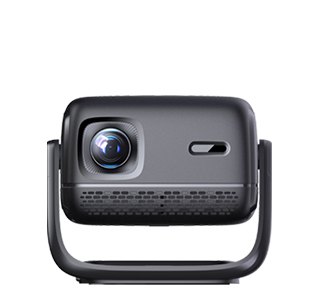
The stereoscopic effect of 3D projectors is generally obvious, but its quality depends on multiple factors, including the 3D technology used, the quality of the 3D content, the projector’s performance, and the supporting equipment (such as 3D glasses). 3D projectors create an immersive stereoscopic experience by simulating human binocular vision, which requires presenting slightly different images to each eye, and the human brain then synthesizes these two images to perceive depth and spatial awareness. Currently, the mainstream 3D technologies used in projectors are polarized (passive) 3D and active shutter 3D, each with its own advantages and contributing to the obviousness of the stereoscopic effect.
Polarized 3D projectors, often equipped with dual lenses (such as the Liying polarized 3D projector), use two display chips to present left and right eye images separately, and polarized glasses with filters to separate the images. This technology ensures that the 3D effect is stable without flickering, and the brightness does not attenuate when switching from 2D to 3D. Users wearing polarized glasses can experience a strong sense of depth, with objects on the screen appearing to "jump out" of the screen, creating an immersive experience comparable to IMAX theaters. For example, the Liying polarized 3D projector has a 3D contrast ratio of 3000:1, and its dual-lens design ensures that the left and right eye signals are completely synchronized, resulting in no ghosting or flickering. The polarized glasses are also lightweight, comfortable to wear, and do not require charging, with a light transmittance of up to 86%, making the 3D images bright and vivid.
Active shutter 3D projectors, which are more common in single-lens models, use high-frequency flickering to present left and right eye images alternately, and the shutter glasses synchronize with the projector to block each eye alternately. While this technology can also achieve obvious stereoscopic effects, it may have issues such as flickering, reduced brightness (transmittance of only about 25%), and heavy glasses that require charging, which can affect the viewing experience. Additionally, the quality of 3D content is crucial—high-quality 3D movies or games with clear depth cues will significantly enhance the stereoscopic effect, while low-quality content may lead to blurriness or weak depth perception. Some advanced 3D projectors also support multiple 3D formats, including frame-packaged (Blu-ray), left-right, and top-bottom, ensuring compatibility with a wide range of 3D content. Overall, when paired with high-quality content and appropriate supporting equipment, 3D projectors can deliver an obvious and immersive stereoscopic effect that brings users a realistic viewing experience.
Read recommendations:
HW45 Home Cinema - HW Series Projector
65W Portable Projector
Mini Smart 1080P Projector for outdoor movie










 Reviewed: