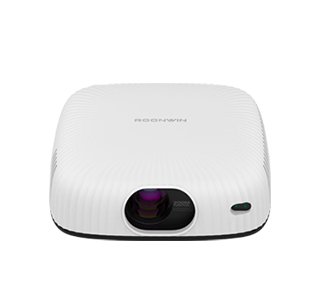
Power consumption differs sharply between projectors and televisions, determined by screen size, light source type and operating mode, directly affecting household long-term electricity costs. First, mainstream smart LED TVs have stable power consumption data. A 55-inch household LED TV consumes 80W to 120W per hour, a 65-inch model runs 130W to 180W hourly, and large 75-inch TVs reach 200W to 260W constant power. Its power output stays fixed during playback, with no obvious fluctuation whether playing movies or idle standby.
Projector power consumption is classified by built-in light source, with huge gap among different models. Portable LED projectors for daily use only consume 30W to 60W per hour, which is less than half power of a 55-inch TV. Household laser projectors, the most popular home theater type, consume 120W to 200W hourly, equivalent to a 65-inch TV. Professional high-brightness bulb projectors for commercial use consume 280W to 380W per hour, exceeding power consumption of 75-inch large-size TVs. Besides, projectors have extra standby and cooling power consumption: internal cooling fans keep working for 3 to 5 minutes after shutdown, adding tiny extra power use.
Long-term use scenarios decide which device saves more electricity. For short daily viewing within 2 hours, portable projectors have absolute power-saving advantages. For all-day long-hour playback, large-size TVs have more stable energy efficiency, as projectors need high brightness output constantly to guarantee clear images, raising average power consumption. In conclusion, small portable projectors are low-power devices, while high-brightness home projectors have similar or higher power consumption than same-viewing-size smart TVs.
Read recommendations:
HW30 Home Cinema - HW Series Projector
1G Android Projector
Projectors with Manual Keystone Correction















 Reviewed: