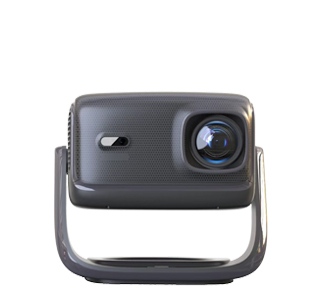
Selecting the right projector screen is essential for achieving a high - quality projection experience, as it significantly impacts the clarity, brightness, and color accuracy of the projected image. When it comes to projector screen matching, several factors need to be considered, including the type of projector, the intended use of the screen, the room environment, and personal preferences.
The first factor to consider is the type of projector being used. Different projectors have varying brightness levels, resolutions, and contrast ratios, and the screen should be chosen to complement these characteristics. For example, high - brightness projectors are suitable for use in rooms with ambient light, and they pair well with screens that have a high gain. Screen gain refers to the amount of light the screen reflects back to the viewer. A high - gain screen, with a gain of 1.5 or higher, will make the image appear brighter, but it may also reduce the viewing angle. On the other hand, low - brightness projectors are better suited for dark rooms, and a screen with a lower gain, around 1.0, can provide a more natural and even image across a wider viewing angle.
The intended use of the screen also plays a crucial role in the matching process. For home theaters, where the focus is on immersive movie - watching experiences, a large - format screen with a wide aspect ratio, such as 16:9 or 2.35:1, is often preferred. These screens can provide a cinematic feel and allow viewers to fully engage with the content. In business presentations, a screen with a 4:3 or 16:9 aspect ratio may be more suitable, depending on the type of content being presented. Additionally, interactive projector screens are available for educational and collaborative settings, which allow users to interact with the projected content directly on the screen.
The room environment is another important consideration. If the room has a lot of ambient light, an ambient light - rejecting (ALR) screen is a great option. ALR screens are designed to block out ambient light from the sides and above, enhancing the contrast and visibility of the projected image. In rooms with limited space, a motorized or pull - down screen can be a practical choice, as it can be retracted when not in use, saving space. Moreover, the color and texture of the screen surface can also affect the image quality. Matte screens are commonly used as they provide a more even distribution of light and reduce glare, while screens with a slightly textured surface can enhance the sharpness of the image.
Read recommendations:
HW40 Home Cinema - HW Series Projector
Natural Color Projector
Requirements for Projector Bracket Stability













 Reviewed: