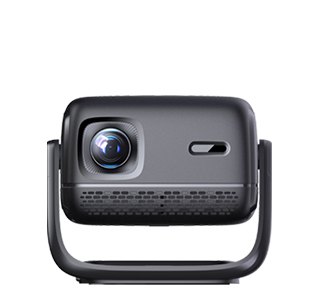
Choosing between a projector and a TV for the bedroom depends on the core usage needs, space conditions, and viewing habits. The bedroom is a small private rest space with different usage attributes from the living room. Living rooms focus on high-definition display and stable public viewing, while bedrooms prioritize comfort, immersion, space adaptability, and eye protection. After comprehensive comparison, projectors are more suitable for most family bedroom scenarios, while TVs are only recommended for users who pursue ultra-high-definition clarity and fixed daytime viewing.
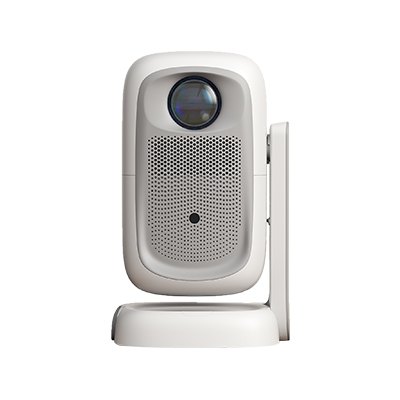
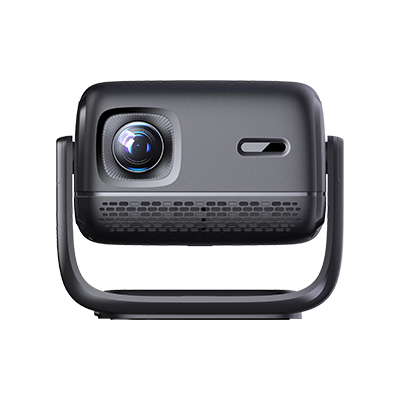
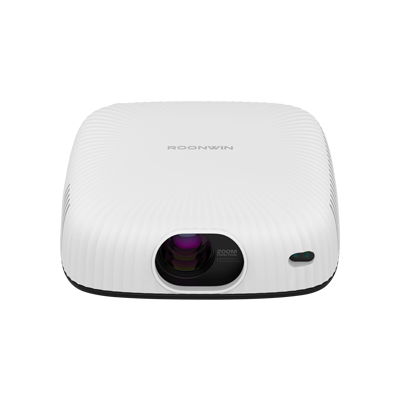
Projectors have obvious advantages in immersion and space adaptability for bedroom use. Bedroom walls are usually blank and large enough to support a 100 to 150-inch ultra-large projection screen, far exceeding the maximum size of bedroom TVs (generally 32 to 55 inches). The ultra-large screen brings a private cinema-level viewing experience, which is very suitable for watching movies, dramas, and variety shows before bedtime. In terms of space occupation, the projector is compact and portable, can be placed on a bedside table, shelf, or suspended on a ceiling bracket, without occupying wall and ground space, and will not affect the overall decoration style of the bedroom. In contrast, wall-mounted or floor-standing TVs occupy fixed space, and large-size TVs will make the small bedroom appear crowded and cramped.
In terms of eye protection and comfort, projectors are more in line with bedroom rest attributes. Projectors adopt diffuse reflection imaging technology, which reflects light through the wall or screen and then enters the human eye. The light is soft and uniform, without strong stroboscopic and blue light radiation, and will not cause eye fatigue even after long-term bedtime viewing. TVs use direct light imaging, with high screen brightness and concentrated light, which is easy to produce glare and eye irritation in dark bedroom environments, affecting eye health and even sleep quality. In addition, silent projectors with low-decibel operation will not produce noise interference, while TVs have fixed speaker sound leakage, which is more likely to affect quiet rest in small bedrooms.
TVs have limited advantages in picture clarity and instant usability. High-resolution smart TVs have higher pixel density and more accurate color restoration, with no picture blurring or loss of detail, and can be used normally in bright daytime environments without being affected by light. Projectors rely on dark environments for optimal imaging, and the picture will fade slightly in strong light. However, bedrooms are mostly used for rest and night viewing, so the light limitation of projectors has little impact on daily use. In terms of cost and functionality, mid-range projectors have lower purchase costs and richer scene functions such as sleep timing and mobile projection, which are more in line with diversified bedroom entertainment needs.
Overall, for ordinary family bedrooms focusing on bedtime entertainment, immersive viewing, eye protection and space saving, projectors are the better choice. For users who mainly watch programs during the day and pursue extreme picture clarity, small-size high-definition TVs can be selected as an alternative. Combining comfort, practicability and scene adaptability, projectors are the most ideal display device for modern bedroom scenarios.
Read recommendations:
HW40 Home Cinema - HW Series Projector
Can Projectors Connect to Switch
Projector cost-effectiveness















 Reviewed: