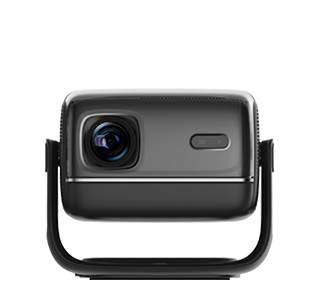
Projectors with adjustable screens (often referred to as “projectors with flexible screen adjustment”) are projection devices that allow users to modify the size, shape, or position of the projected image without moving the projector itself—offering unmatched flexibility for adapting to different spaces and screen setups. Unlike basic projectors that require physical repositioning to change the image size or alignment, these adjustable models use optical or digital adjustment features (e.g., zoom, keystone correction, or lens shift) to tailor the image to the available screen or wall. They are ideal for use in rooms with fixed projector mounting locations (e.g., ceiling-mounted in a home theater) or in spaces where the screen size changes frequently (e.g., a classroom that switches between small group activities and full-class presentations).
The primary adjustment features include optical zoom, digital zoom, keystone correction, and lens shift—each serving a unique purpose. Optical zoom uses a movable lens to adjust the image size while maintaining resolution and image quality. A projector with a 1.2x optical zoom, for example, can increase the image size by 20% (e.g., from 100 inches to 120 inches) or decrease it without losing sharpness—critical for users who want to avoid the pixelation that comes with digital zoom. Digital zoom (used as a backup or for minor adjustments) crops and scales the image digitally, which may reduce resolution slightly but offers greater flexibility for fine-tuning size. Keystone correction fixes trapezoidal distortion caused by projecting at an angle (e.g., the projector placed below the screen, resulting in a “taller” top edge). Optical keystone correction (preferred for quality) adjusts the lens to correct distortion without digital processing, while digital keystone correction uses software to reshape the image—both ensure the image remains rectangular. Lens shift (a premium feature) allows the lens to move horizontally or vertically without tilting the projector—ideal for ceiling-mounted projectors that need to align the image with a screen that’s not directly below, or for side-mounted projectors that need to avoid blocking the audience’s view.
These adjustment features work together to adapt to diverse spaces. For example, in a small apartment with a fixed wall-mounted projector, lens shift can align the image with a window shade (used as a temporary screen) without moving the projector. In a conference room with a retractable screen that changes size (from 80 inches to 120 inches), optical zoom lets the user adjust the image to match the screen size perfectly. For outdoor use with an irregularly shaped wall, keystone correction can fix distortion from the projector’s angled position on the ground, creating a rectangular image. Many adjustable projectors also include “preset” functions, allowing users to save favorite screen settings (e.g., “Small Meeting,” “Large Presentation,” “Home Movie”) and switch between them with one button—saving time and ensuring consistency.
User-friendly controls make adjustments accessible to everyone. Most adjustable projectors feature intuitive interfaces: physical buttons on the device, a remote control with dedicated adjustment keys, or even smartphone apps that let users tweak settings from across the room. Visual guides on the screen (e.g., grid lines for keystone correction) help users align the image accurately, even if they’re not familiar with projection technology. For ceiling-mounted projectors (which are hard to reach), remote lens shift and zoom eliminate the need for ladders or physical adjustments—users can fine-tune the image from the comfort of their seat.
The flexibility of adjustable screen projectors makes them versatile for any scenario. They eliminate the need to “force” a space to fit the projector, instead letting the projector adapt to the space—whether it’s a tiny bedroom, a large lecture hall, or an outdoor backyard. With high-quality optical adjustments that preserve image clarity, they ensure the content always looks its best, no matter the screen size or position. For anyone seeking a projector that can grow with their needs or adapt to changing environments, adjustable screen models are the ultimate solution.
Read recommendations:
HI Gift Customization - HI Series Projector
High - Definition Live - Streaming Projectors
Natural Color Projector










 Reviewed: