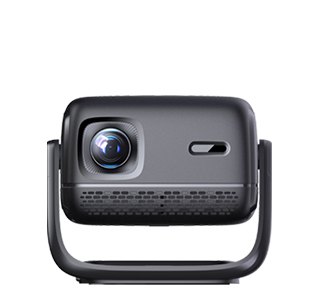
Projectors with long-life bulbs are projection devices designed to minimize the frequency of bulb replacement, featuring light sources that last significantly longer than standard projector bulbs—reducing maintenance costs and downtime. Unlike traditional projectors that use halogen or UHP (Ultra High Performance) bulbs with lifespans of 2,000–5,000 hours, these long-life models typically use LED (Light Emitting Diode) or laser light sources, which can last 20,000–50,000 hours (or even longer for laser) under normal use. They are ideal for high-use environments like classrooms, offices, conference rooms, and home theaters where the projector is used daily for extended periods, as well as for users who want to avoid the hassle and expense of frequent bulb changes.
The extended lifespan is due to the inherent properties of LED and laser light sources, which differ from traditional bulbs. Traditional UHP bulbs generate light by heating a mercury arc, a process that causes rapid wear and tear— the bulb’s filament or arc tube degrades over time, leading to dimming and eventual failure. LED bulbs, by contrast, produce light through semiconductor diodes that emit light when an electric current passes through them—they have no moving parts or fragile components, so they degrade much more slowly. Laser light sources use a laser diode to generate intense light, which is then converted to visible light via a phosphor wheel—this technology is even more durable than LEDs, with some laser projectors offering lifespans of up to 60,000 hours (equivalent to 6 hours of use per day for 27 years). For example, a classroom projector used 8 hours a day, 5 days a week, would need a bulb replacement every 6–12 months with a traditional UHP bulb, but with an LED bulb, it could go 5–10 years without replacement.
Long-life bulbs also offer additional benefits beyond durability. They maintain consistent brightness and color quality over their lifespan—traditional bulbs often dim by 30–50% before failing, but LEDs and lasers retain 70–80% of their original brightness even after 20,000 hours. This consistency ensures that presentations, movies, or lessons always look clear and vibrant, without the need to adjust brightness settings as the bulb ages. Additionally, LED and laser light sources are more energy-efficient than traditional bulbs, consuming 30–50% less electricity—this not only reduces energy bills but also generates less heat, which extends the lifespan of other projector components (e.g., the cooling system) and makes the projector quieter (since less heat means smaller, slower fans).
Maintenance and cost savings are significant advantages. The cost of replacing a traditional projector bulb ranges from (50–)200, and frequent replacements add up over time—for a high-use office projector, bulb replacements could cost (200–)400 per year. With a long-life LED or laser projector, these costs are eliminated for 5–10 years or more. Additionally, the reduced need for maintenance means less downtime— a classroom projector won’t be out of service waiting for a new bulb, and a home theater user won’t have to pause their movie night to replace a failed bulb. Many long-life projectors also include features like dust-proof designs and air filters that further extend the light source’s lifespan by preventing dust accumulation, which can cause overheating and premature failure. For users prioritizing reliability, cost savings, and low maintenance, projectors with long-life bulbs are an essential investment.
Read recommendations:
HW30 Home Cinema - HW Series Projector
Is Projecting on the Ceiling for Fitness Workout Videos Effective?
Budget Portable Projector Under $100













 Reviewed: