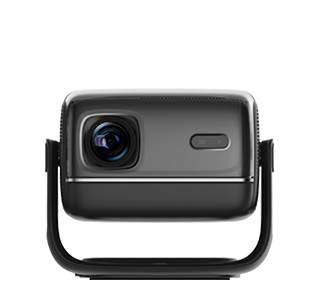
Laser light source technology has become a key breakthrough direction in the projector industry in recent years, gradually replacing traditional LED and UHP light sources with its advantages of high brightness, long service life, stable color performance, and low energy consumption, leading the upgrading of projector light source technology. In the past, traditional projectors mostly used LED or UHP light sources, which had obvious limitations: LED light sources had low brightness, which could not meet the needs of bright environments; UHP light sources had a short service life (usually 2,000-3,000 hours), and the brightness would decay rapidly after long-term use, requiring frequent replacement of light bulbs, which increased the use cost of users. These limitations restricted the application of projectors in high-brightness scenarios and long-term use scenarios.
In recent years, laser light source technology has achieved significant breakthroughs in multiple aspects, first of all, in the improvement of brightness and efficiency. The launch of high-power laser diodes has greatly improved the brightness of laser projectors. For example, Ushio Inc. has developed the "HL63680HD" red laser diode for projectors, which achieves the world's highest optical output power of 4.2W in pulsed mode at a high temperature of 45°C, and the world's highest wall-plug efficiency of 45% in 638nm pulsed operation at 25°C. This high-power laser diode not only improves the brightness of the projector but also reduces power consumption, making the projector more energy-efficient. At present, the brightness of high-end laser projectors can reach more than 5,000 lumens, which can display clear and vivid pictures even in bright environments, breaking the dependence of traditional projectors on dark environments. In addition, the service life of laser light sources has been greatly extended, usually reaching 20,000-30,000 hours, which is 10 times that of UHP light sources. Users can use the projector for a long time without replacing the light source, which greatly reduces the use cost.
Another major breakthrough in laser light source technology is the improvement of color performance and heat dissipation. Traditional laser light sources had the problem of color cast, which could not accurately reproduce the original colors of the content. Through the optimization of laser wavelength and color mixing technology, the latest laser light sources can achieve 100% coverage of the DCI-P3 color gamut, which is close to the color effect of professional movie theaters, bringing more realistic color experience to users. At the same time, the problem of heat generation of laser light sources has also been effectively solved. Through the optimization of chip structure and heat dissipation design, laser projectors can maintain stable performance even in long-term high-brightness operation, avoiding the problem of brightness decay and color distortion caused by overheating. In addition, laser light source technology is also moving towards miniaturization and integration, making laser projectors more compact and portable, expanding their application scenarios. For example, Barco's F80-Q9 laser projector adopts laser-phosphor technology, which is small in size, high in reliability, and suitable for professional scenarios such as VR CAVE and industrial prototyping. With the continuous breakthrough of laser light source technology, laser projectors have gradually penetrated into home, office, education, and commercial display markets, becoming the mainstream product of mid-to-high-end projectors, and promoting the high-quality development of the entire projector industry.
Read recommendations:
HW40 Home Cinema - HW Series Projector
Standards Related to Projectors
Portable Projector with One-Click Screen Mirroring & Zero Setting Operation













 Reviewed: