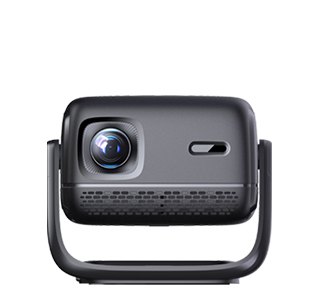
LCOS (Liquid Crystal on Silicon) technology is a specialized display technology that combines the advantages of LCD and DLP technologies, offering high resolution, excellent color accuracy, and high contrast. Initially developed for projection televisions in the 1990s, LCOS has since evolved and found applications in high-end projectors, particularly in home theater, professional imaging, and near-eye display systems. LCOS projectors use a microdisplay that consists of a liquid crystal layer deposited on a silicon backplane, which acts as a spatial light modulator. Unlike transmissive LCD panels (used in 3LCD projectors) that allow light to pass through, LCOS panels are reflective, meaning they reflect light to create images—similar to DLP’s DMD chip but with the color capabilities of LCD.
The early development of LCOS technology was marked by challenges related to cost, manufacturing complexity, and image quality. Early LCOS projectors suffered from issues such as pixel crosstalk, low brightness, and high production costs, which limited their adoption in the consumer market. However, advancements in microfabrication technology and optical design have addressed these issues, making LCOS a viable option for high-end projectors. Key milestones in LCOS development include the introduction of JVC’s D-ILA (Direct-Drive Image Light Amplifier) and Sony’s SXRD (Silicon X-tal Reflective Display) technologies, which optimized the LCOS structure to improve brightness, contrast, and resolution. These advancements allowed LCOS projectors to deliver 4K and even 8K resolution, with contrast ratios exceeding 1,000,000:1, making them ideal for high-end home theaters and professional applications.
In recent years, LCOS technology has continued to evolve, focusing on improving efficiency, reducing cost, and expanding application scenarios. Modern LCOS projectors feature advanced light management systems that reduce light loss and improve brightness, addressing one of the technology’s historical limitations. Additionally, the integration of laser light sources with LCOS panels has further enhanced performance, offering longer lifespans, consistent color reproduction, and higher brightness levels. LCOS technology has also found applications beyond traditional projectors, including near-eye displays (such as VR headsets), wavelength-selective switching, and structured illumination. Looking ahead, the development of LCOS technology is expected to focus on miniaturization, higher resolution (such as 16K), and integration with AI and IoT technologies, further solidifying its position as a high-end display solution. While LCOS projectors remain more expensive than DLP and 3LCD models, their superior image quality makes them the preferred choice for discerning users who demand the best possible viewing experience.
Read recommendations:
HI Gift Customization - HI Series Projector
4K Home theater Projector
Fire-resistant Projector OEM
















 Reviewed: