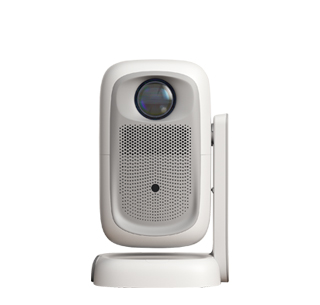
Projector AI intelligent voice technology represents the integration of artificial intelligence and voice recognition technology into projection devices, revolutionizing user interaction by enabling natural, intuitive, and hands-free control. Unlike basic voice control systems that only support simple commands, AI intelligent voice technology leverages machine learning, natural language processing (NLP), and far-field voice recognition to understand complex user instructions, adapt to user habits, and provide personalized responses. This technology is built on a foundation of hardware (high-sensitivity microphones, dedicated voice processors) and software (advanced AI algorithms, voice databases), working together to deliver fast, accurate, and seamless voice interaction.
At the core of projector AI intelligent voice technology is natural language processing (NLP), which allows the projector to understand human language in a conversational manner, rather than requiring rigid, pre-programmed commands. For example, instead of saying “set brightness to 80%,” a user can say “make the picture brighter so I can see it better in the afternoon,” and the AI system will interpret the intent and adjust the brightness accordingly. This conversational capability makes the technology more user-friendly, especially for those who are not familiar with technical terminology. Additionally, AI voice systems use machine learning to adapt to individual user accents, speech patterns, and preferences over time, improving recognition accuracy and personalizing the user experience. For instance, if a user frequently asks for children’s cartoons, the AI may learn to recommend similar content when the user says “play something for the kids.”
The hardware infrastructure supporting AI intelligent voice technology is equally important. Modern projectors are equipped with 2 to 4 high-sensitivity far-field microphones that can capture voice commands from a distance of 3 to 5 meters, even in noisy environments. These microphones are paired with dedicated voice NPU that handle local noise reduction, keyword recognition, and command processing, reducing reliance on cloud connectivity and ensuring fast response times (typically under 1.2 seconds). Many projectors also integrate cloud-based voice engines (such as DeepSeek or proprietary AI platforms) that expand the range of supported commands, including content search, smart home control, and even general knowledge queries. For example, a user can ask the projector “what’s the weather tomorrow” or “turn on the living room lights” (if integrated with a smart home system), making the projector a central hub for home interaction.
While projector AI intelligent voice technology has made significant advancements, it still faces some challenges. Accent recognition can be inconsistent for non-native speakers or users with strong regional dialects, and complex commands may occasionally be misinterpreted. Additionally, privacy concerns exist, as voice data may be collected and stored (either locally or in the cloud). However, manufacturers are addressing these issues by improving dialect support, implementing local data processing to protect privacy, and allowing users to disable voice recognition when not in use. Overall, AI intelligent voice technology is transforming projectors from passive display devices into interactive smart hubs, enhancing user convenience, and driving the evolution of the projector industry toward greater and integration with modern smart home ecosystems.
Read recommendations:
HI Gift Customization - HI Series Projector
Entry-Level 2d Projector for Small Businesses
3d Projector support 3d video format















 Reviewed: