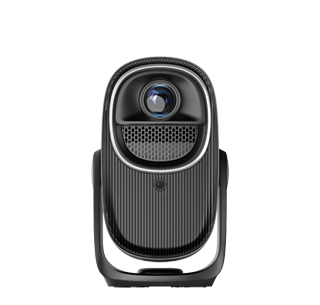
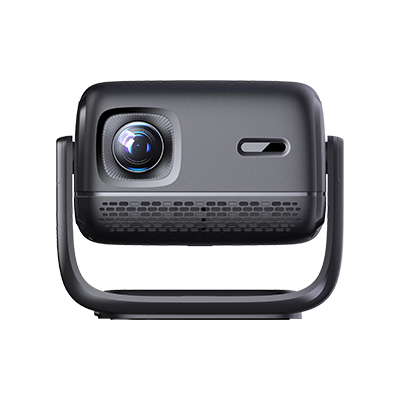
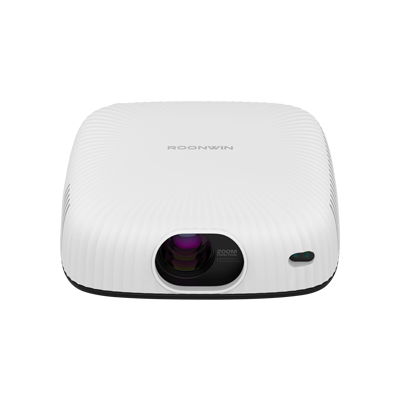
WXGA portable 3D DLP projector is a portable intelligent projection device
with WXGA high-definition resolution. Relying on mature DLP digital optical
processing technology and native 3D imaging solutions, it combines
high-definition picture quality, portable body and stereoscopic viewing effect,
perfectly adapting to diverse scenarios such as home leisure, outdoor camping,
small office and dormitory movie watching. Compared with ordinary portable
projectors, this device has finer picture resolution and more stable 3D imaging
capability, and can present full-layer and uniform-color projection pictures. In
actual use, imaging balance and projection angle are two core elements that
determine the upper limit of device picture quality. Imaging balance directly
affects the uniformity of picture brightness, color and focusing, while accurate
angle adjustment is the key to maintaining stable 3D stereoscopic imaging and
eliminating picture distortion. Focusing on the two cores of imaging balance
maintenance and projection angle debugging, this paper elaborates on
professional usage skills to help users give full play to the performance
advantages of WXGA portable 3D DLP projector and unlock a stable,
high-definition and stereoscopic viewing experience at all times.
Imaging balance is the core foundation for WXGA portable 3D DLP projector
to output high-quality pictures and the key performance guarantee of DLP
projection equipment. Imaging balance refers to the imaging state of uniform
overall picture brightness, unified color, accurate focusing and symmetrical 3D
optical path. Once the imaging balance is broken, problems such as uneven
picture brightness, color deviation, blurred corners and 3D stereoscopic
ghosting will occur, seriously reducing the viewing quality. This portable 3D
DLP projector adopts a precision micro-mirror imaging structure with extremely
high precision internal optical components. Slight vibration, placement
deviation and ambient light interference will break the overall imaging balance.
In daily use, keep the device placed stably before powering on, and reserve
dozens of seconds for imaging self-inspection after startup to allow the device
to automatically calibrate the optical path and balance brightness and colors,
avoiding imaging imbalance caused by immediate screen projection after
power-on.
Meanwhile, light adaptation is the key to maintaining imaging balance. WXGA
high-definition resolution is highly sensitive to light. Uneven ambient light
sources and local strong light reflection will cause unbalanced picture
brightness and color faults, and destroy the three-dimensional balance of 3D
imaging. Daily movie viewing should avoid local side light and reflective light
sources, and adopt a uniform soft light environment to ensure highly consistent
brightness and color of the full screen. In addition, long-term use of the
device will lead to lens dust accumulation, poor heat dissipation and slight
aging of internal components, which may cause imaging imbalance and result in
clear center and blurred corners. Therefore, it is necessary to clean the lens
regularly to ensure unobstructed heat dissipation, avoid excessive body heat
caused by long-term continuous operation, so as to prevent optical path offset
and color attenuation, and continuously maintain the optimal imaging balance
state of the device, ensuring WXGA high-definition picture quality and pure 3D
stereoscopic effect.
Accurate debugging of projection angle is the core method to maintain the
imaging balance and optimize the viewing experience of WXGA portable 3D DLP
projector. DLP 3D imaging technology has a low error tolerance for projection
angles. Compared with ordinary 2D projection, picture quality problems caused by
angle deviation are more obvious. Slight tilt and offset will directly break the
optical path balance, leading to trapezoidal distortion, asymmetric pictures and
invalid 3D stereoscopic effects. Basic horizontal angle calibration is the
premise of all debugging. Place the device on a flat and stable platform to
ensure the body is completely horizontal and centered, facing the projection
wall or screen. Fine-tune the left and right angles through the device’s
built-in intelligent horizontal calibration function to make the four sides of
the projection picture parallel and four corners square, fundamentally ensuring
symmetrical and balanced imaging and avoiding 3D layering and lack of
stereoscopy caused by picture offset.
Fine debugging of pitch angle and side projection angle adapts to various
complex usage scenarios. In conventional desktop front projection scenarios,
fine-tune the pitch angle according to the viewing sitting posture and viewing
distance, and cooperate with the intelligent trapezoidal correction function to
adjust the picture to a comfortable horizontal viewing range. It not only avoids
visual fatigue caused by upward and downward viewing, but also ensures uniform
full-screen focusing and balanced colors, eliminating the problem of
inconsistent clarity of upper and lower pictures. For scenarios where front
projection is unavailable in small apartments and temporary spaces, the side
projection mode can be appropriately turned on with slightly adjusted tilt
angles. The device’s intelligent correction system will automatically correct
picture deformation, maximizing the retention of WXGA high-definition picture
quality and 3D imaging balance. It should be noted that the side projection
angle should not be too large. Excessive tilt will completely disrupt the 3D
optical path structure, causing severe ghosting and picture distortion and
thoroughly destroying the imaging balance.
In daily use, angle adjustment should follow the principle of fine tuning,
avoiding violent twisting and frequent movement of the device. When the device
is running, the internal micro-mirror components are in a high-speed working
state, and sudden angle changes will directly damage the optical structure and
cause permanent imaging imbalance. Flexibly adjust the projection angle
according to the scenario, and slightly expand the viewing angle for
multi-person viewing to ensure uniform and consistent pictures and stereoscopic
effects in all positions. Imaging balance and angle adjustment complement each
other. Accurate angle adjustment protects imaging balance, and stable imaging
state maximizes the device’s picture quality advantages. Mastering these two
professional usage skills enables WXGA portable 3D DLP projector to maintain
peak picture quality at all times, adapt to full-scene movie viewing needs, and
easily create a portable, high-definition immersive audio-visual space for home
and outdoor use.
Read recommendations:
HN30A Portable - HN Series Projector
65W Smart Projector
Common Application Scenarios of Projectors










 Reviewed: