Return to News Center
Portable and Lightweight Projectors
 Reviewed:0
Release time:2025-11-11
source:About Us
Reviewed:0
Release time:2025-11-11
source:About Us
Guide:
Portable and lightweight projectors are compact projection devices designed for on-the-go use, prioritizing small size and low weight without compromising core performance—making them ideal for business travelers, students, outdoor movie enthusiasts, and remote workers. Unlike traditional home theater or office projectors (which are often bulky, weighing 5–10kg), these portable models typically weigh 0.5–2kg and fit easily into backpacks, laptop bags, or carry-on luggage, enabling users to set u

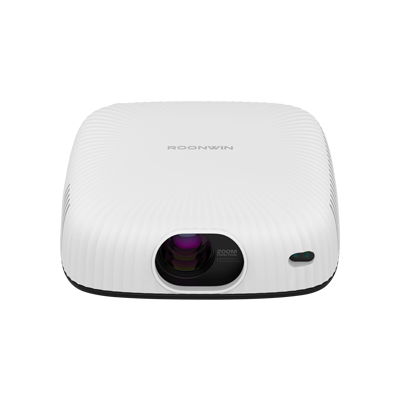
Portable and lightweight projectors are compact projection devices designed for on-the-go use, prioritizing small size and low weight without compromising core performance—making them ideal for business travelers, students, outdoor movie enthusiasts, and remote workers. Unlike traditional home theater or office projectors (which are often bulky, weighing 5–10kg), these portable models typically weigh 0.5–2kg and fit easily into backpacks, laptop bags, or carry-on luggage, enabling users to set up a projection system anywhere, from hotel rooms and coffee shops to camping sites and classroom lecture halls.
The lightweight design is achieved through advanced miniaturization of components and innovative engineering. Manufacturers use slim, high-density circuit boards to reduce the projector’s internal volume, and replace heavy metal casings with lightweight, durable materials like carbon fiber or reinforced plastic (which also resist scratches and minor impacts during transport). Key components like the light source (often LED or laser) and lens system are optimized for compactness: LED light sources are smaller than traditional halogen bulbs, and some models use foldable or retractable lenses to further reduce the device’s footprint. For example, a ultra-portable projector weighing just 600g can measure as small as 15cm×10cm×3cm—about the size of a hardcover book—yet still deliver 100–300 ANSI lumens of brightness, enough to project a 100-inch image in dimly lit environments.
Portability does not mean sacrificing functionality. These projectors support versatile connectivity options, including HDMI, USB-C, Wi-Fi, and Bluetooth—allowing users to connect laptops, smartphones, tablets, or USB drives to project presentations, videos, or documents. Many models include built-in speakers (1–5W), eliminating the need for external audio equipment, and some have rechargeable batteries (providing 2–4 hours of use on a single charge) for true wireless operation. For example, a business traveler can use a portable projector in a hotel room to deliver a client presentation, connecting it to a laptop via USB-C and relying on the built-in battery if there’s no nearby power outlet. Outdoor enthusiasts can set up the projector at a campsite, streaming movies from a smartphone via Wi-Fi and using the built-in speaker for audio.
User-friendly features enhance the on-the-go experience. Portable projectors often have simple, intuitive controls (physical buttons or touch panels) and automatic keystone correction (to fix distorted images when the projector is not aligned perfectly with the screen). Some models even support screen mirroring (e.g., AirPlay for iOS devices or Miracast for Android) for quick, cable-free content sharing. The durability of these projectors is also optimized for travel: many have dust-proof designs and can withstand minor bumps or drops, ensuring they hold up to the rigors of frequent transport. For anyone needing a flexible, easy-to-carry projection solution that adapts to diverse environments, portable and lightweight projectors offer unmatched convenience without compromising on performance.
Read recommendations:
HI Gift Customization - HI Series Projector
Suitable Projection Distance for 100-inch Screen for Home Projectors
Main Indicators of Projectors