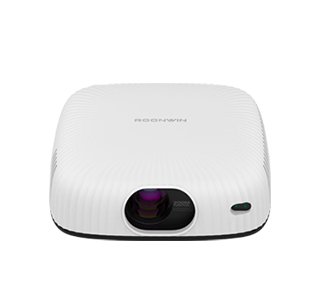
A comprehensive projector usage guide covers all aspects of using a
projector, from basic operations to advanced features. To start, understand the
different types of projectors and their specific functions. There are business
projectors designed for presentations, home theater projectors for movie
viewing, and educational projectors for classroom use. Each type has its own set
of features optimized for its intended purpose.
When setting up the projector, consider the room environment. For a home
theater, a dark room with minimal ambient light is ideal for the best viewing
experience. In a business or educational setting, you may need to account for
more ambient light. Adjust the projector's brightness, contrast, and color
settings accordingly. Some projectors offer different preset modes for various
environments, such as a bright room mode or a dark room mode.
For advanced usage, explore the projector's connectivity options. Many
modern projectors support multiple input sources simultaneously. You can switch
between different devices, like a laptop and a Blu - ray player, with ease using
the input selection feature on the remote control or in the projector's menu.
Some projectors also support split - screen functionality, allowing you to
display content from two different sources side by side.
If you're using a projector for gaming, adjust the settings to optimize the
gaming experience. Enable the game mode, if available, which reduces input lag
for a more responsive gameplay. You can also adjust the refresh rate to match
your gaming console or PC's output for smooth motion.
For presentations, make use of the projector's annotation features, if
available. Some projectors allow you to mark up slides directly on the projected
image, highlighting important points or adding notes in real - time. This can be
a valuable tool for engaging the audience.
When using a projector in a multi - user environment, such as in a
classroom or office, set up user profiles. This allows each user to save their
preferred settings, such as image mode, sound settings, and input source
preferences. It saves time and ensures that each user gets the optimal
experience.
Read recommendations:
HN30B Portable - HN Series Projector
Extending the Lifespan of Projectors
The Practicality of Projector Automatic Obstacle Avoidance Technology













 Reviewed: